

Privacy-First AI Styling: Fashion’s Next Luxury Trend in 2026
Privacy-first AI styling is becoming one of the most important fashion and lifestyle trends of 2026. The idea is simple: shoppers want better recommendations, easier resale discovery, smoother virtual try-ons, and smarter retail experiences, but they do not want to feel watched, copied, or reduced to a data profile.
That tension is now visible across the fashion market. Vogue Business recently reported that fashion-conscious consumers are curious about AI but cautious about trust, creativity, job loss, privacy, and the loss of human interaction. At the same time, resale platforms, luxury retailers, and wearable technology companies are racing to use AI for search, fit, personalization, clienteling, and discovery.
The result is a new standard for modern fashion: technology can be valuable, but only when it feels discreet, useful, opt-in, and human-led.
Why AI Styling Is Trending Now
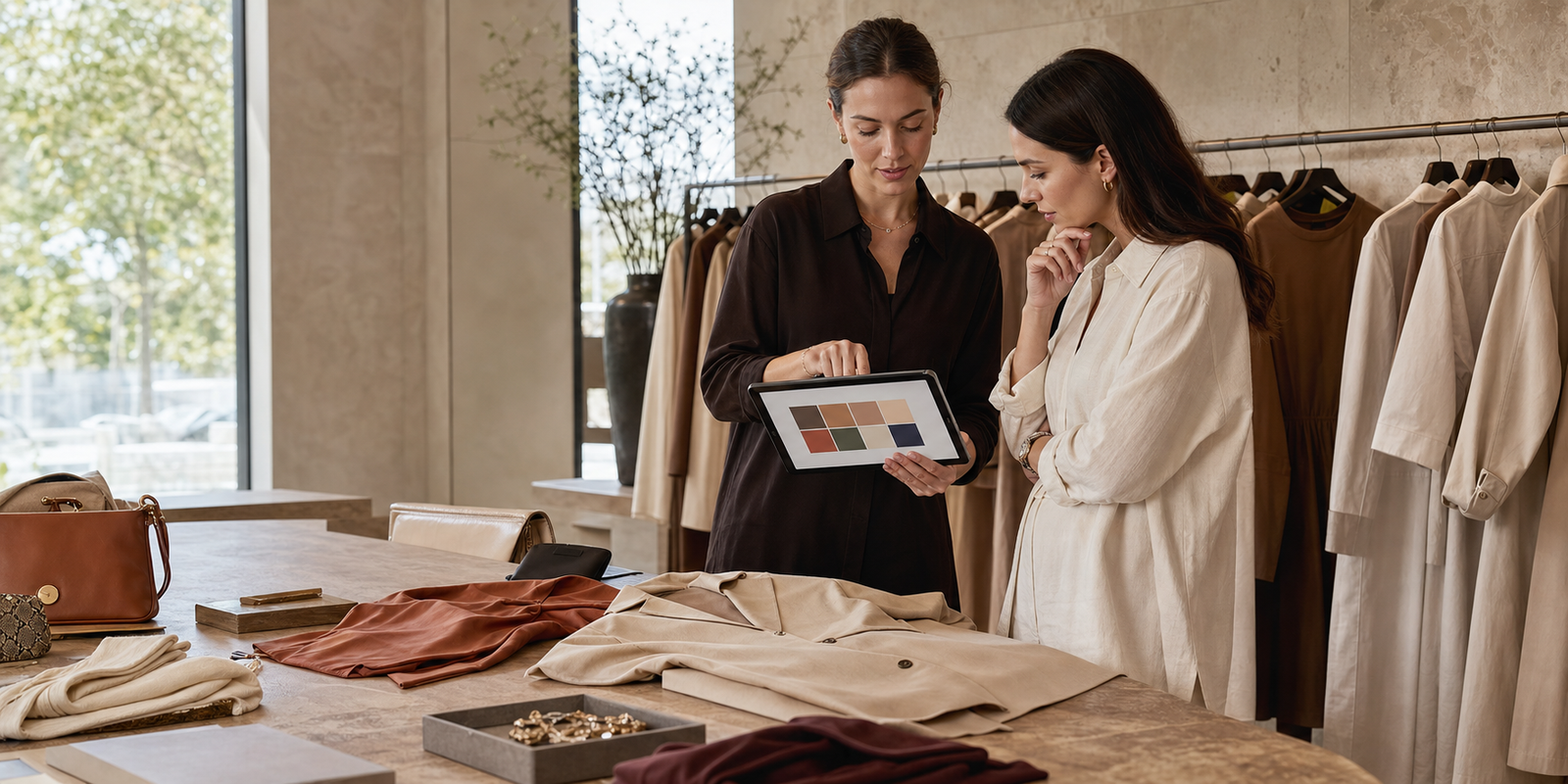
AI has been used in fashion for years, but 2026 is different because the technology is moving closer to the shopper. It is no longer limited to inventory planning, ad targeting, or back-office forecasting. Consumers are seeing AI in shopping assistants, virtual try-on tools, smart mirrors, resale search, product recommendations, visual search, and wearable devices.
For consumers, the promise is attractive. AI can help answer practical style questions:
- What should I wear with pieces I already own?
- Which size is most likely to fit?
- Can I find a similar item secondhand?
- What works for my budget, climate, body type, and lifestyle?
- Which trend is worth buying, and which one will disappear quickly?
For brands and retailers, the business case is equally clear. Better personalization can reduce choice overload, improve conversion, increase loyalty, reduce returns, surface under-discovered inventory, and make stores feel more responsive.
But fashion is not a purely functional category. A recommendation for a jacket, dress, fragrance, bag, or pair of glasses carries identity, aspiration, emotion, and social meaning. That is why generic AI suggestions often feel flat. Shoppers do not only want an algorithm to predict what they might buy. They want taste, context, confidence, and control.
The Trust Gap: Consumers Want Help, Not Surveillance
The biggest barrier to AI styling is trust. In Vogue Business’s 2026 AI consumer survey, many respondents used AI tools in general life, but fashion and beauty shopping adoption remained low. The survey found that only a small share of respondents regularly used AI chatbots for fashion and beauty shopping, while many were concerned about creativity, employment, human interaction, and data privacy.
That gap matters because fashion personalization depends on sensitive signals. A truly useful styling assistant may need to know a shopper’s body preferences, budget, workplace, social calendar, location, climate, purchase history, saved images, measurements, and insecurities. Those details are valuable because they make styling more personal. They are also risky because they can make the experience feel invasive.
Privacy-first AI styling changes the question from “How much data can we collect?” to “What is the smallest amount of data needed to create a better experience?”
Practical examples include:
- Letting shoppers choose whether to save body measurements or delete them after one session
- Explaining when a recommendation is sponsored, automated, or human-selected
- Keeping sensitive preference data inside a brand account instead of spreading it across ad networks
- Giving customers a clear “reset my style profile” option
- Using human stylists to review high-value recommendations
- Avoiding facial recognition or always-on cameras unless there is a clear, voluntary reason
For luxury brands, privacy may become part of the product experience. A quiet, controlled, respectful shopping environment can feel more premium than a hyper-personalized feed that follows the customer everywhere.
Human Curation Becomes More Valuable
AI can process huge catalogs, but it does not automatically create taste. Taste depends on proportion, occasion, culture, mood, quality, personal history, and the subtle difference between “technically matching” and “actually stylish.”
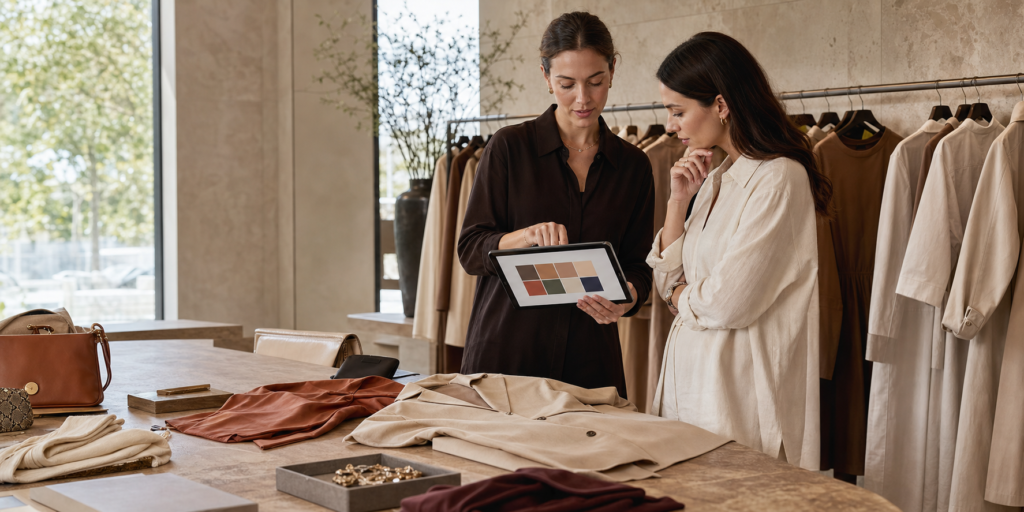
That is why the strongest fashion AI systems in 2026 are likely to work behind the scenes. They can help a stylist see stock availability, customer preferences, fabric options, color stories, or compatible pieces. The human advisor still interprets the moment: whether the shopper wants confidence, comfort, experimentation, discretion, or a wardrobe reset.
This is especially important for premium and luxury fashion. A luxury client may appreciate an AI-assisted appointment if it saves time and improves fit. The same client may reject an AI-only experience if it removes the ritual, emotion, and service that make the purchase feel special.
The best model is not “machine versus human.” It is AI for search, memory, logistics, and options; humans for taste, empathy, and final judgment.
Resale Fashion Gets Smarter
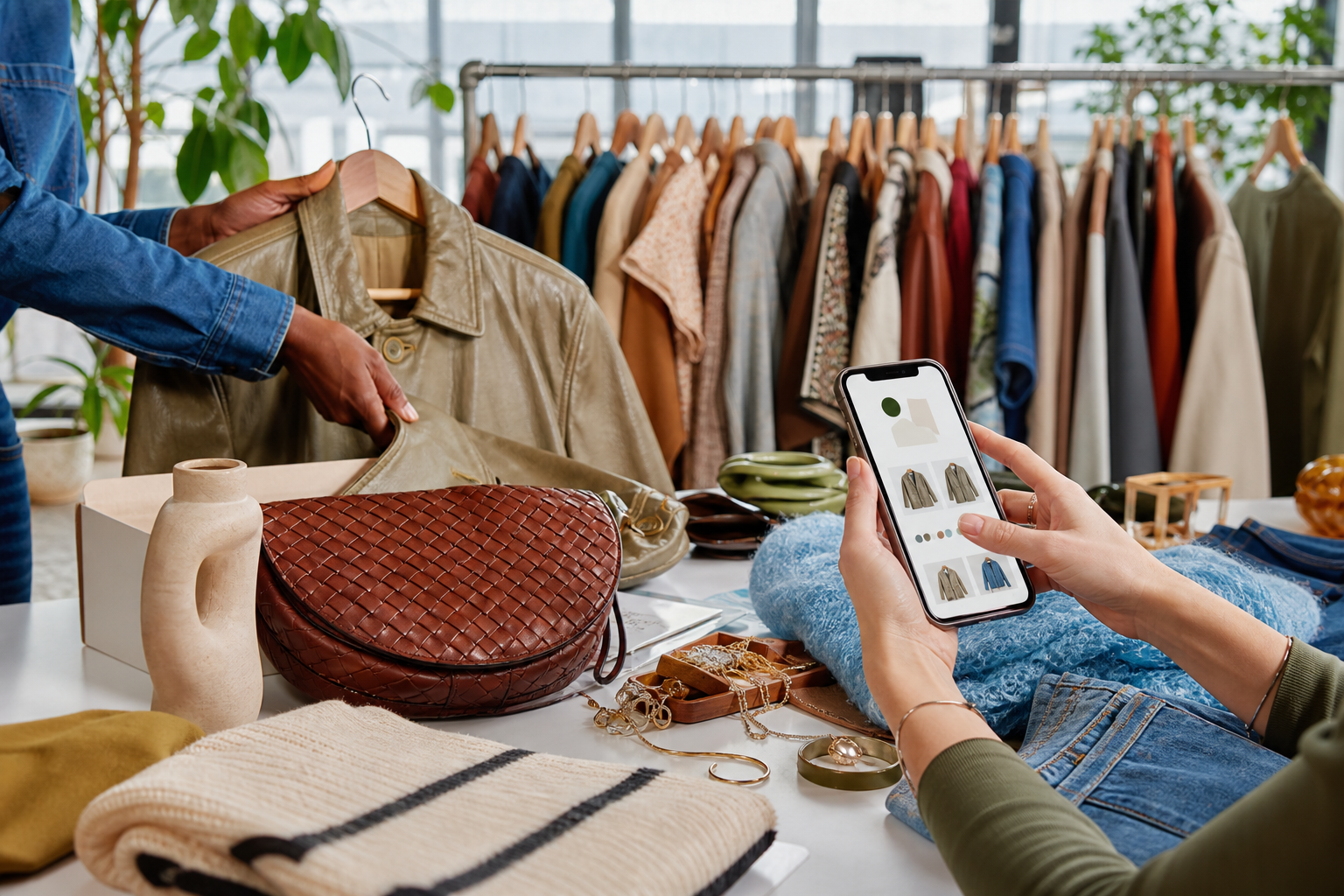
Resale is another reason AI styling is gaining momentum. Secondhand fashion is growing quickly, but resale shopping can be difficult because inventory is fragmented, sizing is inconsistent, photos vary in quality, and many great items are hard to describe in search terms.
The Guardian, citing ThredUp’s 2026 resale report and GlobalData research, reported that global secondhand clothes sales are forecast to reach $289 billion in 2026, with AI helping shoppers find deals more easily. That is a major signal for fashion businesses: resale is no longer a niche sustainability habit. It is becoming a mainstream shopping behavior shaped by value, discovery, social media, and technology.
AI can make resale more practical by improving:
- Visual search for similar silhouettes, colors, and fabrics
- Automated product tagging from photos
- Condition grading and authentication workflows
- Price recommendations for sellers
- Outfit suggestions that mix new and secondhand pieces
- Alerts for hard-to-find items in a shopper’s preferred size
For consumers, this means a better chance of finding unique, affordable, and lower-waste pieces. For brands, it creates both pressure and opportunity. If shoppers can find alternatives instantly, new collections must earn attention through quality, fit, story, and service. At the same time, brands can build resale, repair, and archive programs that keep customers inside their ecosystem.
Wearable Tech Has a Fashion Problem and a Privacy Problem
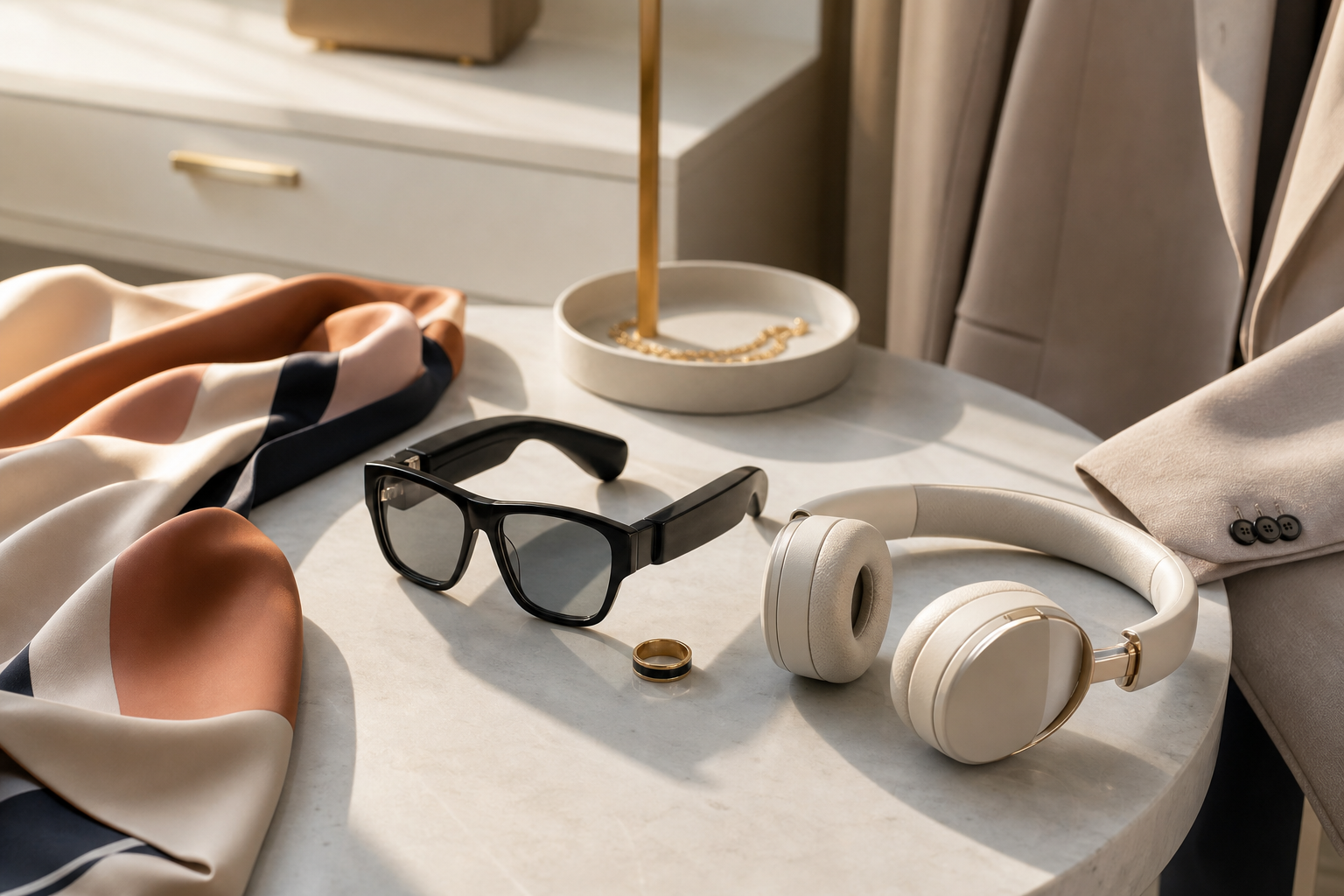
Wearable technology is also entering a more fashion-conscious phase. Smart glasses, rings, headphones, cameras, and health devices are increasingly styled as accessories rather than gadgets. Vogue Business has covered the rise of “cute tech” and the growing fashion relevance of consumer hardware.
But wearables bring a sharper privacy challenge than shopping apps. A phone-based style assistant mostly affects the user. Camera-equipped glasses or always-on devices can affect everyone nearby. That creates questions around consent, recording, data storage, social etiquette, and whether fashion collaborations can make surveillance feel more acceptable.
The next wave of wearable fashion will need to solve more than aesthetics. It must answer practical trust questions:
- Does the device record images, sound, location, biometrics, or bystanders?
- Is recording obvious to people nearby?
- Can the user disable sensors clearly and physically?
- What data stays on the device, and what goes to the cloud?
- Is the product useful without collecting sensitive data?
- Does the design encourage respectful use in public and private spaces?
The brands that win will make privacy part of the design language. Camera-free glasses, local processing, clear indicators, minimal data retention, and simple controls can become fashion features, not technical footnotes.
What Fashion Brands Should Do Now
Privacy-first AI styling is not only a technology decision. It is a brand strategy decision. The implementation should match the promise of the brand.
1. Start With a Real Styling Problem
Do not add AI because competitors are doing it. Start with a specific customer problem: outfit building, size confidence, resale discovery, appointment preparation, wardrobe planning, or product education. If the feature does not make the shopping experience easier or more enjoyable, customers will treat it as a gimmick.
2. Make Data Use Visible and Optional
Fashion shoppers should know what is being saved, why it matters, and how to remove it. Consent should be specific, not buried inside a generic policy. Body data, face images, purchase history, and style preferences deserve especially careful handling.
3. Keep Humans in Premium Moments
AI can prepare options, but premium purchases still benefit from human judgment. For luxury, bridal, formalwear, executive wardrobes, beauty, fragrance, and high-value accessories, the human layer should be obvious and easy to access.
4. Use AI to Improve Operations, Not Just Screens
Some of the highest-value AI work may happen out of sight: better inventory matching, faster returns processing, smarter appointment preparation, reduced overproduction, improved repair routing, and more accurate resale listings. These improvements can create a better customer experience without making the store feel overly automated.
5. Build a Clear Creative Policy
If a brand uses AI-generated campaign imagery, synthetic models, automated styling content, or virtual try-on assets, it should set rules for disclosure, model consent, copyright, diversity, and quality control. Poorly executed AI visuals can damage trust quickly, especially in fashion where image quality is central to credibility.
What Shoppers Should Watch
Consumers can also use this trend carefully. AI styling tools can be useful for inspiration, resale search, packing lists, occasion outfits, and wardrobe gaps. The key is to keep control.
Before using a styling app or virtual try-on tool, check whether it lets you delete uploaded images, measurements, and style profiles. Be cautious with tools that require unnecessary access to photos, contacts, location, or biometric data. Treat AI recommendations as a starting point, not a final authority.
The most useful wardrobe decisions still come from a combination of fit, comfort, budget, quality, lifestyle, and personal feeling. If an AI tool helps clarify those things, it is valuable. If it pushes constant buying, trend chasing, or uncomfortable data sharing, it is not serving you.
Business Impact: Why This Trend Matters
Privacy-first AI styling affects the full fashion value chain.
Retailers can increase conversion by making discovery easier, but they risk losing trust if personalization feels manipulative. Luxury brands can use AI to improve clienteling, but they must protect exclusivity and human service. Resale platforms can unlock inventory, but they need strong authentication, pricing, and seller tools. Wearable brands can become lifestyle objects, but only if privacy and etiquette are designed from the start.
For startups, the opportunity is wide. Useful products include privacy-preserving wardrobe apps, on-device visual search, AI-assisted resale listing tools, human-in-the-loop styling platforms, fit confidence systems, circular fashion logistics, and consent-first wearable interfaces.
For established brands, the opportunity is to make technology feel calmer and more personal. In 2026, the winning fashion experience may not be the most automated one. It may be the one that gives customers the most confidence, control, and human connection.
What to Watch Next
Three signals will show where the market is heading.
First, watch whether AI shopping assistants become more transparent about sponsored recommendations. If shoppers cannot tell whether advice is neutral or paid, trust will weaken.
Second, watch resale integration. Brands that connect new products, archive pieces, repairs, and resale may create stronger long-term loyalty than brands that only chase seasonal purchases.
Third, watch wearable privacy. Smart glasses and AI accessories will keep improving, but public acceptance will depend on consent, social norms, and sensor design.
Privacy-first AI styling is not anti-technology. It is a more mature version of fashion technology: useful enough to save time, discreet enough to feel premium, and respectful enough to earn trust.
FAQ
What is privacy-first AI styling?
Privacy-first AI styling uses artificial intelligence to support outfit recommendations, fit guidance, resale discovery, and retail service while minimizing data collection and giving shoppers clear control over their information.
Why is AI styling important in fashion right now?
AI styling is growing because consumers want easier product discovery, better fit confidence, and more personalized shopping. The challenge is making those tools trustworthy, tasteful, and human-centered.
Can AI replace human fashion stylists?
AI can help with search, catalog matching, sizing, and wardrobe suggestions, but it cannot fully replace human taste, empathy, and occasion-specific judgment. The strongest model combines AI support with human curation.
How does AI help resale fashion?
AI can improve visual search, automate product tagging, recommend prices, detect similar items, match outfits, and make fragmented secondhand inventory easier to browse.
What should shoppers check before using AI try-on or styling apps?
Shoppers should check whether the app explains its data use, allows deletion of uploaded images or measurements, limits unnecessary permissions, and clearly separates organic recommendations from sponsored results.
Sources
- Vogue Business: “You Cannot Trust a Machine” – The AI Consumer Perception Survey
- Vogue Business: Is Privacy the New Luxury?
- Vogue Business: Do Smart Glasses Have a Surveillance Problem?
- Vogue Business: AI’s Maturation Point and Cute Tech – 2026 Fashion-Tech Predictions
- Vogue Business: Inside Retail’s AI-Enhanced Future
- The Guardian: Secondhand clothes sales forecast to hit $289bn as AI helps shoppers find deals
- arXiv: Agentic Personalized Fashion Recommendation in the Age of Generative AI
- arXiv: VOGUE – A Multimodal Dataset for Conversational Recommendation in Fashion