
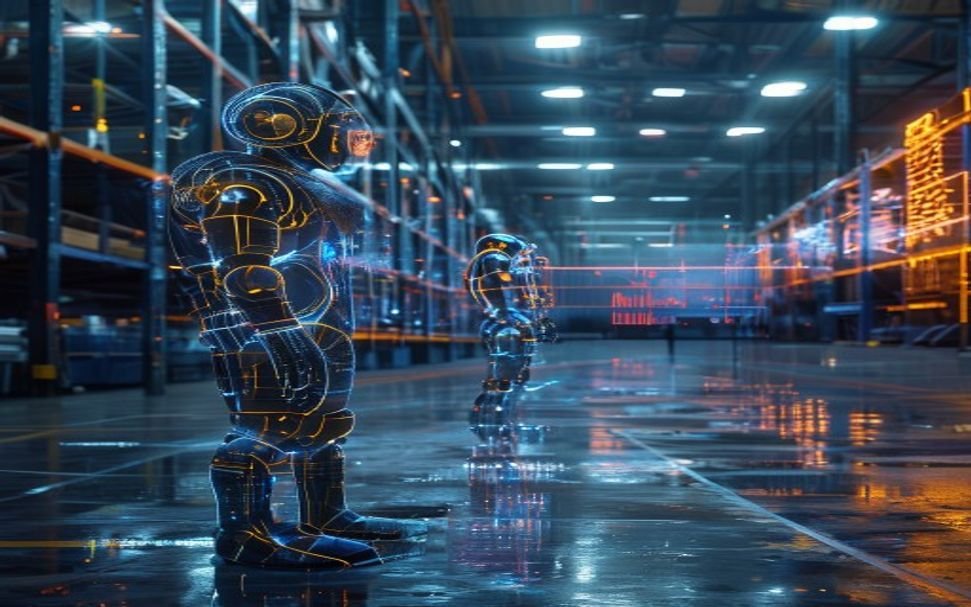

In the last week of June 2026, three separate announcements landed in the robotics sector that would have been science fiction a decade ago. Agility Robotics, the Oregon-based maker of the Digit warehouse robot, filed for a $2.5 billion SPAC listing on the Nasdaq. Unitree Robotics, China’s volume leader in humanoid shipments, received approval for an IPO on Shanghai’s STAR Market at a valuation above 100 billion yuan — approximately $14.7 billion. And Tesla, not technically going public but making an equally loud statement, announced it had converted its former Model S production line in Fremont, California into a dedicated assembly line for Optimus Gen3, targeting one million units annually.
Three companies. Three public-market moves. One week.
Humanoid robots in 2026 have crossed a threshold that no previous wave of robot hype managed to cross: investors with real capital are now willing to price a future where human-shaped machines work alongside people on factory floors, in warehouses, and eventually in hospitals and homes.
Why Humanoid Robots — and Why Right Now?
The humanoid form factor has a compelling practical argument: the world was built for humans. Doorknobs, stairs, conveyor belts, and assembly jigs are all sized for a bipedal being. A robot matching this body plan can operate in any human-built environment without redesigning the facility — a massive advantage over fixed-arm industrial robots.
What changed in 2025 and 2026 is that the software finally caught up. Advances in imitation learning, vision-language-action (VLA) models, and large-scale robot pre-training allow humanoids to learn new tasks through demonstration. The global humanoid robot market was valued at $2.92 billion in 2025, according to Markets and Markets, and is projected to reach $15.26 billion by 2030 at 39.2% CAGR. Cumulative investment through Q1 2026 exceeded $6 billion. In 2025, the industry shipped 18,000 units globally — growing to 115,000 by 2027, per ABI Research. Morgan Stanley projects a $5 trillion market by 2050.
The IPO Trio: Agility, Unitree, and Tesla’s Production Bet
Agility Robotics: America’s First Humanoid Public Company
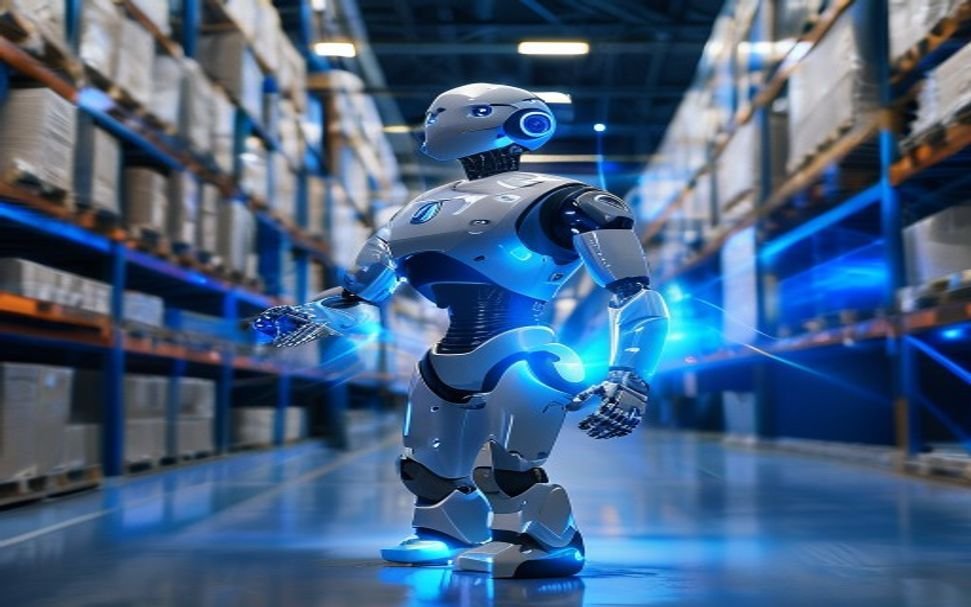
On June 24, 2026, Agility Robotics announced a SPAC merger targeting a $2.5 billion valuation and Nasdaq debut as AGLT, delivering over $620 million in gross proceeds, per TechCrunch. Digit has logged 65,000 hours of real-world operations with Toyota, GXO Logistics, and Spanx, arriving with $300 million in pre-orders for Digit v5. According to the State of Robotics 2026 Report, Agility is the only humanoid company generating consistent revenue from productive commercial work — making AGLT structurally different from speculative robotics listings of the past.
Unitree: China’s Volume Play Goes to the STAR Market
Unitree cleared its IPO on Shanghai’s STAR Market at a valuation anchored above 100 billion yuan ($14.7 billion), per BigGo Finance. Its G1 humanoid sells for ~$16,000 — far below the $50,000–$200,000 range of Western competitors — and the company delivered 5,500+ units in 2025, making it the global volume leader. Unitree signals China intends to dominate humanoid robotics through the same cost-compression playbook used for EVs.
Tesla Optimus: Not an IPO, but a Statement
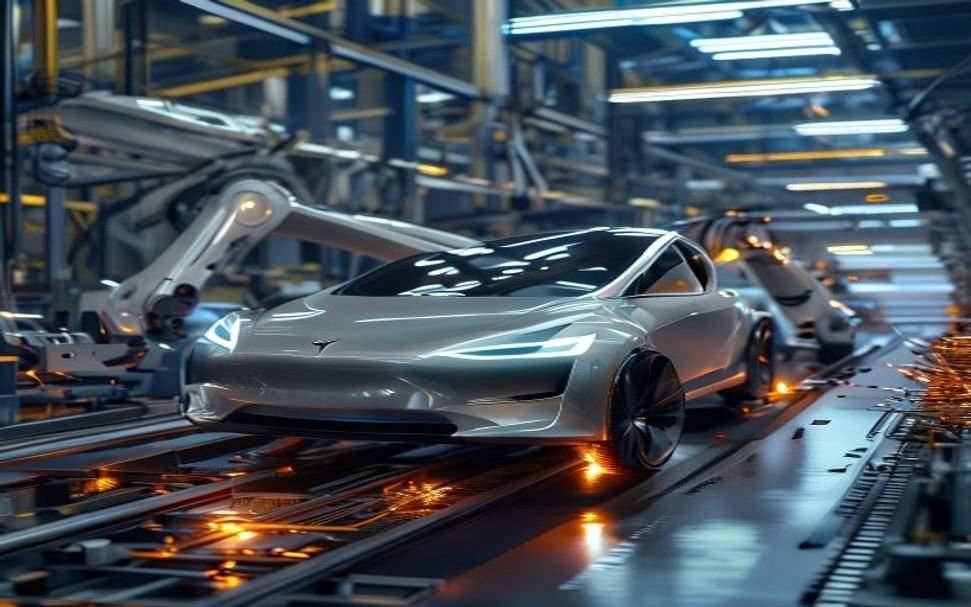
Tesla converted its former Model S/X production line in Fremont into a dedicated Optimus Gen3 assembly line targeting one million units annually. Elon Musk noted initial production will be slow due to a supply chain requiring roughly 10,000 entirely new components, with true mass production not expected until 2027. Still, it is the single largest capital commitment to humanoid robots in history.
The Broader Race: Who Else Is Building
At least 30 companies are actively developing commercial humanoid robots. Figure AI holds the highest private valuation at $39 billion, with Figure 03 in production at BMW’s Spartanburg plant. Boston Dynamics has deployed the all-electric Atlas at Hyundai’s RMAC. Apptronik’s Apollo works at Mercedes-Benz facilities. Xpeng Robotics is beginning mass production of “Iron” in Guangzhou. AgiBot’s A2 Ultra has surpassed 1,000 deployed commercial units, per Origin of Bots.
Japan Airlines (JAL) deployed humanoid robots at Tokyo’s Haneda Airport in May 2026 — a three-year operational commitment, not a press event. When a legacy aviation carrier makes that bet, it signals industries beyond manufacturing have concluded the technology is ready.
The Challenges That Could Derail the Hype
The gap between demo video and production reality is real. The most persistent blocker is battery life: most humanoids run 2–4 hours per charge vs. the 8-hour shifts industry demands. Dexterity at the edge remains unsolved — robots still fail at long-tail physical tasks that humans handle intuitively. Industrial customers expect 95–99% uptime that current platforms cannot consistently deliver.
Safety standards are still being written: ISO has no formal standards for dynamically balancing humanoids; OSHA has no specific guidance, per 2026 safety research. Cybersecurity is an emerging risk — robots executing physical tasks via AI models are a new attack surface, as the recent JADEPUFFER autonomous ransomware incident made clear. And Tesla’s acknowledgment of a 10,000-component supply chain problem reflects a structural reality across the entire industry.
What This Means for Investors and Businesses
For investors, the key questions before any humanoid robotics position are:
- Production deployments or pilot programs? Real revenue requires robots working unsupervised across multiple shifts in customer environments.
- Committed backlog or letters of intent? Binding contracts are categorically different from pre-orders.
- Path to solving battery and dexterity gaps? These are the blockers separating pilots from platform businesses.
For businesses, the near-term opportunity is in repetitive, structured tasks — tote transport, parts handling, material transfer, simple assembly. Amazon, GXO, Toyota, and BMW all identified specific tasks with high turnover, predictable environments, and clear metrics before deploying. The question is not “robots versus humans” but “robots for which specific tasks.”
Looking Ahead
Agility’s Nasdaq debut as AGLT will be the first real-time test of whether public markets value humanoid robotics on forward revenue multiples. Unitree’s STAR Market listing will reveal whether Chinese investors view the robotics race the way they viewed EVs: as a strategic national capability. Tesla’s Optimus wildcard remains: solve the supply chain faster than expected, and Optimus becomes the volume leader no Western manufacturer can match on cost.
The $5 trillion forecast for 2050 is speculative. The $15 billion market by 2030 is plausible. The $2.5 billion Agility deal happening right now is real.
The robots are no longer coming. They are filing their prospectuses.
Sources
- First Humanoid Robot Maker Goes Public: $2.5B Deal — Forbes
- Agility Robotics SPAC Deal — TechCrunch
- Agility Robotics SPAC Nasdaq Debut — TechTimes
- Tesla Optimus + Unitree IPO — BigGo Finance
- Humanoid Robot Market Analysis — Markets and Markets
- Humanoid Robot Market $5T by 2050 — Morgan Stanley
- State of Robotics 2026 — Silicon Valley Robotics Center
- Global Robotics Market Outlook — ABI Research
- Top 10 Humanoid Robot Companies 2026 — Origin of Bots
- 5 Humanoid Robot Challenges — There’s A Robot For That
- Humanoid Robotics: Pilot to Platform — KraneShares
- Humanoid Robot Safety Standards 2026 — There’s A Robot For That