
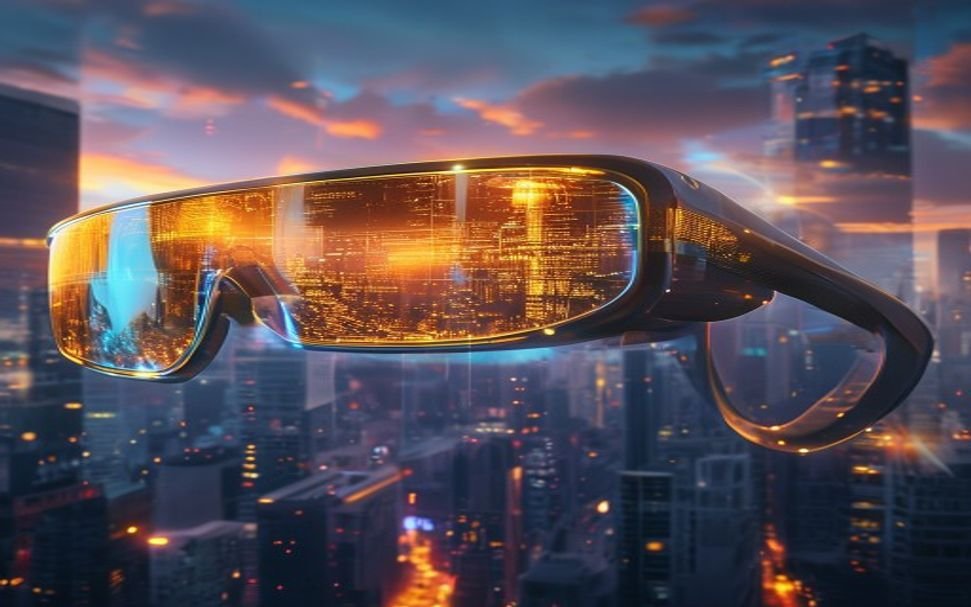

Ten days from now, the smart glasses market may never look the same. Samsung confirmed this week that Android XR smart glasses will debut at Galaxy Unpacked on July 22 in London — and the race for your field of vision is officially on.
If you have been watching the Android XR smart glasses story unfold in 2026, this week marks the moment it shifted from anticipation to countdown. As of today, Augmented World Expo (AWE) 2026 is live in Long Beach, California, surrounded by hardware reveals, developer tool announcements, and real product pricing that confirm we are past the “someday” phase. The extended reality market is valued at $336.5 billion in 2026 and is projected to grow at a compound annual rate of 33.2% through 2035. This article breaks down what Android XR is, who is building it, what Samsung will reveal on July 22, and what it all means for the businesses and consumers navigating this fast-moving space right now.
What Are Android XR Smart Glasses? A Plain-Language Overview
Android XR is not a single device — it is a full operating system and developer platform built by Google specifically for mixed reality hardware. Think of it the way you think about Android for smartphones: rather than building all the phones itself, Google created a shared platform that lets dozens of manufacturers build their own hardware while users get a consistent software experience across all of them.
Google launched Android XR with its AI assistant Gemini embedded at the OS level from the start. That integration means your glasses can answer questions about what they see, translate a foreign-language menu in real time, provide turn-by-turn walking navigation through your earpiece, and manage your calendar or messages — all without pulling your phone out of your pocket.
The platform supports three tiers of hardware. First, audio-only AI frames: no display, just camera, mic, and speakers, launching in 2026. Second, monocular AR display glasses: a tiny screen in one lens for overlaying digital information on the world, also arriving in 2026. Third, binocular XR glasses with dual micro-displays for full spatial computing — on the roadmap for 2027. That staged approach is by design: Google wants developers and consumers to enter the ecosystem on affordable, wearable hardware before the richer display experience arrives.
How Android XR Works Without the Jargon
The 2026 audio-only Android XR glasses offload all heavy computing to your paired smartphone. The frames weigh roughly 50 grams — lighter than a standard pair of Ray-Bans — and carry a camera, speakers, and microphones. When you glance at a storefront and ask the glasses what the hours are, the camera sends the image to Gemini running on your phone, which processes it and speaks the answer through your earpiece within seconds. No cloud subscription, no separate computer puck, no bulky headset. Display-equipped models like XREAL’s Project Aura take a different approach: they connect to a lightweight compute puck via cable, enabling a wide 70-degree field of view for true AR overlays while keeping the glasses frame itself slim.
Why Android XR Smart Glasses Are Trending Right Now
The smart glasses category has existed for more than a decade. What makes 2026 different is the convergence of three forces that were never present at the same time before: fashion-credible hardware, genuinely useful AI, and competitive pricing designed for mainstream buyers. Here are the specific events that made this week the inflection point.
Key developments as of July 2026:
- Samsung confirmed Galaxy Glasses for July 22 Galaxy Unpacked in London — Priced in the $379 to $499 range, Galaxy Glasses land between Meta’s $299 non-display glasses and the $799 Ray-Ban Display model — targeting the gap where the most buyers live. Retail availability follows in fall 2026 in select markets.
- XREAL opened reservations for Project Aura Android XR display glasses — With a price cap below $1,500 — roughly $700 less than Snap’s competing Specs — XREAL’s Aura is positioned as the most affordable display AR entry in its class, featuring a 70-degree field of view and a tethered design that keeps the glasses light. (Road to VR)
- Meta opened the Ray-Ban Display to third-party developers — Meta announced this week that outside developers can now push content directly to the right lens of its Ray-Ban Display glasses, signaling the broader smart glasses ecosystem is maturing from closed platforms toward open developer infrastructure. (Next Reality, July 2026)
- AR glasses unit sales forecast at 6.93 million units in 2026 — That is 47% year-over-year growth, with analysts treating 2026 as the preparation year and 2027 as the year the market truly breaks open.
Key Players Building the Android XR Ecosystem
The Android XR story is as much about an ecosystem as any single device. Six players define the landscape right now.
Google is the platform architect. It built the Android XR OS with Gemini integrated at the core, co-designed eyewear with fashion brands, and is pursuing a three-tier device roadmap rather than shipping a single product. Google’s strategy is to be the software layer that wins regardless of which hardware manufacturer the consumer chooses.
Samsung is the anchor hardware partner. Samsung’s Galaxy ecosystem — phones, watches, earbuds — gives Android XR an instant distribution channel into hundreds of millions of hands. Samsung Galaxy XR devices are projected to exceed 100,000 unit sales in 2026, and that number scales rapidly if the July 22 reveal lands well with consumers.
XREAL has been named Google’s lead hardware partner for display AR. Its Project Aura brings a wide field of view to the ecosystem and targets developers and early adopters who want genuine AR overlays rather than audio-only assistance.
Qualcomm provides the silicon. Its AR1 chipset powers Samsung Galaxy Glasses, delivering the low-power, always-on processing that lets the AI features run throughout a workday without killing the battery in an hour.
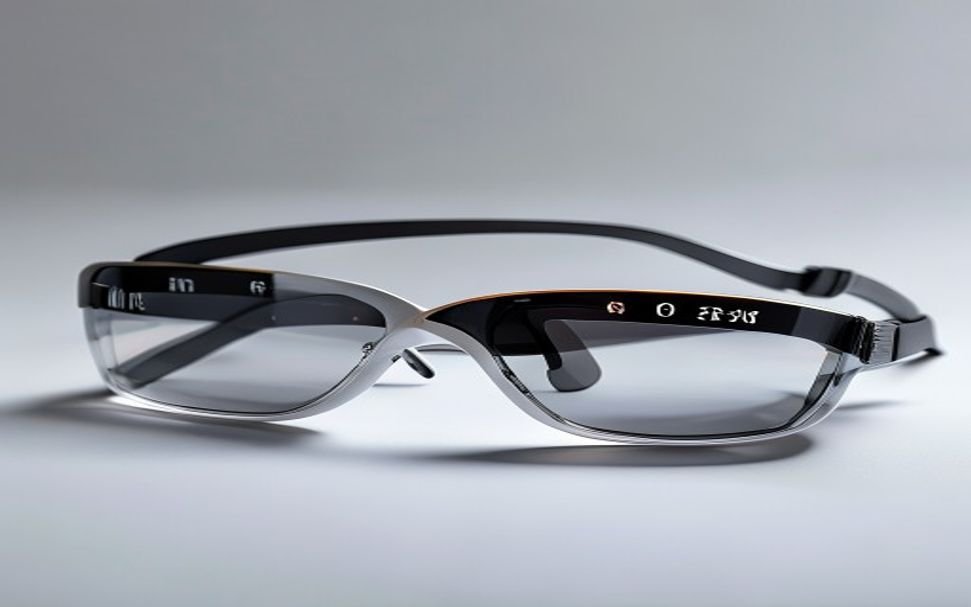
Gentle Monster and Warby Parker are the eyewear partners addressing the credibility gap that killed Google Glass. Gentle Monster delivers fashion-forward, chunky frames for style-conscious buyers. Warby Parker offers everyday, minimalist shapes. This bifurcated design strategy gives Android XR a plausible answer when consumers ask: “But will I actually want to wear these?”
Meta is the competition benchmark. Its Ray-Ban non-display glasses already proved that consumers will wear a camera on their face if the design is right. The Ray-Ban Display at $799 is now the high-end baseline that Android XR is specifically engineered to undercut on price while matching or exceeding on AI capability.
Samsung Galaxy Glasses: Everything We Know About July 22
Samsung’s Galaxy Unpacked on July 22 in London is the moment Android XR moves from a platform announcement to a purchasable product. Based on confirmed details and reporting from 9to5Google, Geeky Gadgets, and VR.org, here is what to expect.
Hardware: Galaxy Glasses weigh roughly 50 grams and carry a 12MP camera, speakers, and microphones. The Qualcomm AR1 chipset handles on-device functions, with all AI processing offloaded to a paired Galaxy phone. The 2026 model has no display — that version is confirmed for a 2027 follow-up SKU.
Price: Leaked figures place Galaxy Glasses in the $379–$499 range depending on frame style. That sits meaningfully below Meta’s Ray-Ban Display and high enough above Meta’s basic $299 glasses that Samsung can offer a richer AI feature set.
Design: Two style families at launch. The Gentle Monster collaboration produces chunky, fashion-forward frames aimed at style-conscious early adopters. The Warby Parker collaboration targets everyday wear with a timeless, understated silhouette. Both families carry identical Android XR hardware internals.
AI features at launch include:
- Real-time language translation — audio translated and played back with a voice matched to the original speaker’s tone
- Text translation of signs, menus, and labels through the camera feed
- Turn-by-turn walking and driving navigation delivered through the speakers
- Hands-free photography with the 12MP camera
- Calendar, messaging, and reminder management via Gemini voice interaction
- Environmental queries — ask Gemini what it sees and get an answer in seconds
The 2027 Display Roadmap
The 2026 Galaxy Glasses are a deliberate stepping stone. Google’s three-tier hardware roadmap concludes with binocular XR glasses — dual micro-displays, one per eye — that can render depth and full mixed-reality spatial overlays without the bulk of a conventional headset. Samsung’s display-equipped follow-up is expected in 2027. For developers, the audio-only 2026 wave is the entry ramp to build Android XR apps; the display wave arriving in 2027 is where the platform’s full spatial potential becomes executable.
Real-World Use Cases You Should Know About
The practical value of Android XR smart glasses emerges most clearly in moments where using a phone is awkward, slow, or unsafe.
- International travel — Live translation in conversation and on-screen text removes language barriers without requiring the user to raise a phone or open an app. This is the use case Google has emphasized most heavily in its developer documentation.
- Hands-free professional tasks — Field technicians, healthcare workers, and warehouse staff can surface instructions, scan barcodes, or log notes via voice without stopping what their hands are doing. Enterprise XR deployments already exist on specialized hardware; Android XR’s arrival could bring the same capability to mainstream consumer devices.
- Navigation in unfamiliar environments — Turn-by-turn audio directions are available without a mounted phone or glancing at a wrist. For cyclists, pedestrians, and delivery drivers, this reduces distraction and keeps attention on the environment.
- Visual AI queries — The ability to point your gaze at an object and ask Gemini about it — a plant species, a wine label, a dish at a restaurant — turns the glasses into an ambient knowledge interface rather than a tool you have to actively invoke.
- Ambient capture — A 12MP camera that is always available without unlocking a phone or opening an app changes how people document moments in fast-moving social, sporting, and professional situations.
At AWE 2026 this week, companies like Flatirons Solutions (which acquired Scope AR) are demonstrating how AR smart glasses can deliver AI-powered work instructions and remote expert support on the factory floor — an enterprise use case that Android XR’s open platform could finally commoditize.
Challenges, Limitations, and What Critics Say
The legitimate concerns around Android XR smart glasses deserve direct attention — ignoring them would give an incomplete picture of where the market actually stands.
Battery life is a real constraint. Display-equipped prototypes like XREAL’s Aura are cited with approximately a four-hour active runtime — enough for a focused work session but far short of full-day use without a recharge. Audio-only glasses like Galaxy Glasses will fare better since they push processing to the phone, but always-on camera and continuous AI queries still create meaningful battery drain. Battery chemistry has not advanced fast enough to make smart glasses a true all-day wearable for everyone in 2026.
Privacy remains the central unresolved tension. Smart glasses with always-on cameras film people who have not consented to being filmed. European regulators have questioned whether an LED recording indicator provides meaningful notice when most bystanders do not know what it signals. In the United States, the Clarkson Law Firm filed a class-action complaint against Meta arguing that placing compliance responsibility on end users is insufficient when the hardware is intentionally designed to look like ordinary eyewear.
Public acceptance is unproven at scale. Google Glass failed in 2013 in part because of how it made bystanders feel about being watched. Android XR glasses are lighter, more capable, and backed by far stronger AI — but the social contract around cameras in public spaces has not changed. Whether Samsung’s fashion-credible design strategy overcomes that friction in the real world is something that can only be answered once the devices are in millions of hands.
Regulatory ambiguity in the United States. As of July 2026, there is no federal framework specifically governing always-on cameras in consumer wearables. That gap leaves manufacturers, users, and bystanders in uncertain territory, and legislation at the state level is arriving in patches rather than as a coherent national standard.
What This Means for Businesses and Consumers
For consumers, the smart move through July 22 is to observe rather than commit. Samsung’s Galaxy Unpacked reveal will clarify final pricing, confirmed availability dates, and the full Gemini feature set at launch. Pre-orders may open immediately after the event, but fall 2026 retail availability means there is no urgency to act before the reveal. If the leaked $379–$499 price proves accurate, Galaxy Glasses will be competitive enough for early adopters to evaluate alongside Meta’s existing lineup.
For businesses, the horizon is 12 to 24 months out but worth preparing for now. Companies in logistics, healthcare, field service, and retail that have been exploring enterprise AR on expensive, specialized hardware should evaluate Android XR as a potential platform migration. The key advantage is the shared SDK with Android: internal developer teams already fluent in Android development can begin building Android XR applications without learning a proprietary toolchain from scratch.
For developers, the window to be early is open right now. Google has made Android XR development accessible from existing Android tooling, and the first major device wave arriving in fall 2026 creates an app store opportunity for teams that begin building today. The audio-only 2026 devices are limited but real — and the display-equipped 2027 devices will reward developers who have already shipped and iterated on the platform.
Looking Ahead: What to Watch in 2027
The 2026 smart glasses wave is a foundation; 2027 is when the structure rises.
- Binocular display glasses from multiple Android XR manufacturers — Google’s roadmap calls for dual-display XR glasses that render depth and mixed-reality spatial overlays. With multiple Android XR hardware partners competing in that tier, price compression is likely to move display AR toward the $500–$800 range faster than the headset market did.
- Snap Spectacles consumer launch — Snap is targeting late 2026 or early 2027 for its next-generation consumer Spectacles. That arrival adds a second major display-capable competitor to the ecosystem, intensifying the product and price competition that benefits buyers. IDC projects AR glasses unit sales growing sharply in 2027 beyond the 6.93 million forecast for 2026.
- Enterprise procurement cycles beginning now — Organizations that start Android XR device evaluations in Q3 2026 will be positioned to roll out enterprise deployments in H1 2027 as the device catalog expands and prices drop into ranges that justify scale procurement.
Conclusion
Android XR smart glasses are not simply a product launch — they are a platform launch, and that distinction matters enormously. When Samsung reveals Galaxy Glasses at Galaxy Unpacked on July 22, it will represent the moment Google’s open Android ecosystem formally enters your field of vision, backed by Samsung’s distribution scale, Qualcomm’s efficient silicon, and fashion partnerships designed to make the hardware something people actually want to wear. The challenges around battery life, privacy regulation, and public acceptance are real and will take years to fully resolve. But the direction of travel in 2026 is unambiguous: smart glasses are moving from niche gadget to mainstream computing platform. The question is no longer whether that transition will happen — it is which platform will own it. Follow eazytechsol.com for full hands-on coverage after Samsung’s July 22 Galaxy Unpacked reveal.
Sources:
- Google and Samsung’s Android XR glasses launch in ‘Fall’ 2026 — 9to5Google
- Galaxy Unpacked July 22 Is the Real Android XR Glasses Moment — VR.org
- Samsung Galaxy Glasses: Specs, Price, and Android XR — Geeky Gadgets
- Google Extends Hardware Partnership with XREAL — Road to VR
- Android XR Glasses Reveal 70° FOV and 4-Hour Battery — Glass Almanac
- 2026 XR Revolution: Android Platform Changes Everything — Next Reality
- Samsung Galaxy Glasses Launch July 2026: Features, Privacy, and Tradeoffs — Gadget Hacks
- Google Brings Android XR to I/O 2026 as Smart Glasses Face Privacy Reckoning — TechTimes
- Google Is Betting on XREAL to Make Android XR Glasses Mainstream — Android Central
- Virtual Reality, AR, MR Market Report 2026–2036 — Yahoo Finance