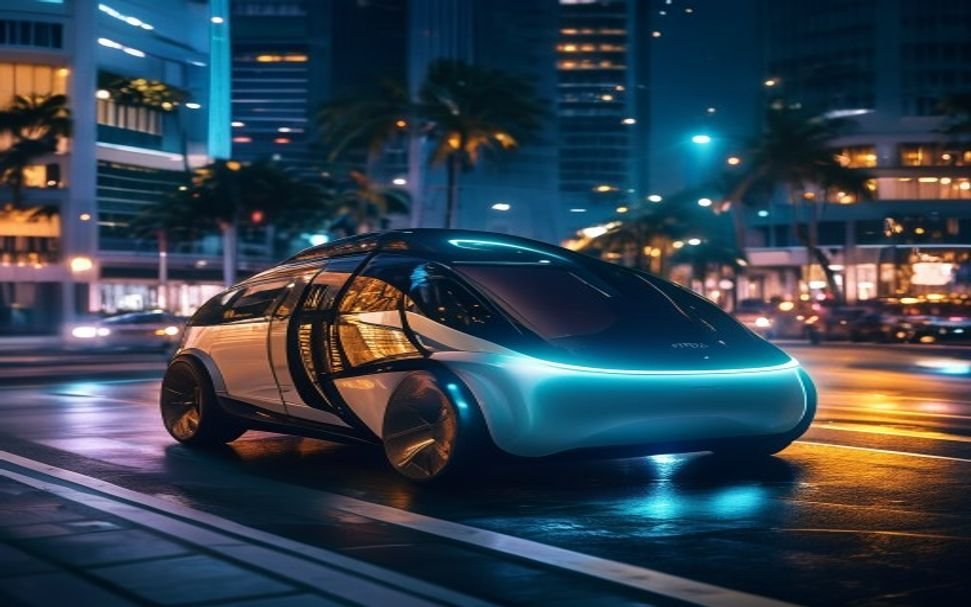

On July 3, 2026, passengers in western Miami opened an app, hailed a ride, and climbed into a car with nobody in the driver’s seat. No safety monitor. No human anywhere nearby. Just software, cameras, and a destination.
That moment — Tesla Robotaxi’s first fully unsupervised launch outside Texas — is the clearest signal yet that autonomous vehicles have crossed from a technology demonstration into a real, functioning service you can actually book today. Not someday. Today.
This article breaks down what the Miami launch means, how Tesla’s approach compares to Waymo, Zoox, and the broader robotaxi industry, where the technology stands right now, what critics are saying, and what to watch over the next twelve months.
What Is Tesla Robotaxi and Why the Miami Launch Is Different
A robotaxi is a vehicle that picks up and drops off passengers with no human driver present. The vehicle uses a combination of sensors, cameras, and AI software to navigate roads, respond to traffic, and complete trips — without any human behind the wheel or in the car.
The concept is not new. Waymo (owned by Google’s parent company Alphabet) has been running paid autonomous rides since 2021. What makes Tesla’s Miami launch genuinely significant is the combination of three specific factors that set it apart from every previous launch.
No Safety Monitor From Day One
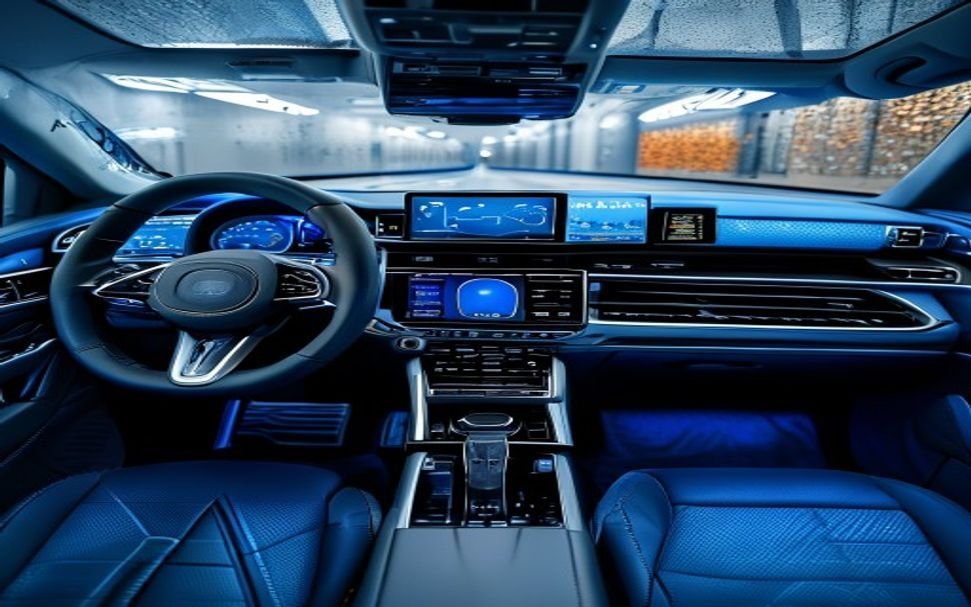
Tesla’s Austin, Texas launch in 2025 initially included safety monitors — company employees sitting in the front seat ready to take control. Miami is different. Ashok Elluswamy, Tesla’s VP of AI Software, confirmed within hours of the July 3 launch that the Miami service runs with absolutely no safety monitor present. A passenger sits in the back seat, the front seats are empty, and the car drives itself entirely. This is a meaningful step beyond prior deployments — and a direct statement that Tesla considers its FSD system sufficiently mature for fully unsupervised public operation.
Camera-Only Technology, Tested in Real Rain
Every other major robotaxi operator — Waymo, Zoox — uses LiDAR (laser-based depth sensing) and radar alongside cameras for sensor redundancy. Tesla uses cameras only, relying entirely on its Full Self-Driving (FSD) neural networks and computer vision. Miami’s heavy, unpredictable rainstorms make it one of the hardest real-world environments for any camera-based system. TechTimes described Florida’s rain as “the hardest test yet” for the camera-only approach — and the results of that test will matter far beyond Miami.
First City Outside Texas
Miami is Tesla’s fifth robotaxi city — after Austin, Dallas, Houston, and an initial California pilot — and the first outside Texas. The service zone covers 10 to 14 square miles in western Miami-Dade County, stretching from Doral in the north through West Miami and south toward Coral Gables. Riders need the dedicated Tesla Robotaxi app (iOS or Android) and should expect a waitlist. Tesla has not disclosed the fleet size, but early rider footage confirmed the service is running.
Who Else Is in the Race: The Robotaxi Competitive Landscape
Tesla is not the only company operating driverless vehicles commercially in 2026. The robotaxi market now has multiple players at different stages of scale and strategy.
Waymo: The Current Market Leader
Waymo — Alphabet’s autonomous vehicle subsidiary — holds the most operationally mature robotaxi service in the United States. Its fleet has grown to more than 1,000 vehicles and completes millions of rides every month, with a publicly stated target of one million rides per week by end of 2026. Waymo is currently operating in Phoenix, San Francisco, Los Angeles, and Austin (via an exclusive Uber partnership), with expansion toward Washington D.C. and additional cities planned in 2026 and 2027.
Unlike Tesla, Waymo’s vehicles carry a full sensor stack: LiDAR, radar, and cameras. The redundancy gives it more operational safety margins in adverse weather. According to Smart Cities Dive’s ongoing robotaxi tracker, Waymo is currently the only company offering fully driverless commercial rides across multiple US cities at meaningful scale.
Zoox: Amazon’s Purpose-Built Contender
Amazon-owned Zoox is operating roughly 50 robotaxis across San Francisco and Las Vegas and is preparing to launch its first paid commercial service in the second half of 2026. Unlike Tesla or Waymo, Zoox built a purpose-designed vehicle — a bi-directional pod without a traditional front or rear — specifically optimized for urban robotaxi use rather than adapted from a consumer vehicle. According to SF Standard’s competitive analysis, Zoox’s purpose-built hardware could provide a genuine edge in dense city deployments.
Uber: The Platform Aggregator
Uber has taken a distinct approach, positioning itself as a platform-agnostic robotaxi aggregator. Rather than building its own autonomous vehicle technology, Uber established integration agreements with more than a dozen AV developers — including Zoox, WeRide, Avride, and Baidu. Uber’s strategy: whichever AV company wins on technology, riders will use Uber’s app to book the ride. It is a lower-risk, higher-leverage position if autonomous adoption accelerates broadly across multiple technology providers.
Chinese Competitors Entering the Race
WeRide and Pony AI — both publicly listed companies with US SEC filings in 2026 — are expanding internationally. Their primary markets remain China, but international expansion filings signal a longer-term competitive ambition. Their entry adds a geopolitical dimension to what is already a high-stakes race between American, European, and Asian technology companies.
The Numbers: What the Autonomous Vehicle Market Looks Like in 2026
The autonomous vehicle market is at a genuine inflection point in 2026. Analysts at Wood Mackenzie describe this as the industry’s “turning point,” forecasting that the global driverless taxi fleet will grow ten times its current size by 2030 — exceeding 100,000 vehicles globally. Key market figures for context:
- Global AV market value: USD 626.9 billion in 2026, forecast to reach USD 850.6 billion in 2027 (Coherent Market Insights)
- Units shipped: An estimated 14.97 million autonomous or semi-autonomous vehicles in 2026, rising to 21.01 million in 2027
- Robotaxi market specifically: $1.95 billion in 2024, projected to reach $188.91 billion by 2034
- Waymo’s ride volume: Millions of rides per month currently, targeting one million rides per week by year-end
For individual vehicle owners, Tesla’s vision is financially compelling: its Robotaxi Network model allows owners to deploy their personal Tesla vehicles as autonomous taxis when not in personal use, generating an estimated $30,000 in annual passive income per vehicle, according to Tesla’s own projections. Whether that vision is achievable depends on regulatory approval, FSD reliability at scale, and competitive pressure from Waymo’s already-proven operational lead.
For businesses, AI-optimized autonomous routing has already shown cost reductions of up to 40% in logistics pilot programs, according to reporting on Tesla’s autonomous fleet plans.
Challenges and What Critics Say
The headline is real: Tesla launched a fully driverless taxi in Miami. The nuance matters just as much.
NHTSA Escalated Its Federal Investigation
The U.S. National Highway Traffic Safety Administration (NHTSA) has escalated its investigation into Tesla’s Full Self-Driving features, which are active in approximately 3.2 million vehicles. Incident reports from Tesla’s Austin launch included a vehicle driving on the wrong side of the road, phantom braking events, and at least one passenger being dropped in the middle of an intersection. These incidents triggered formal federal review and raised direct questions about whether camera-only autonomy is ready for fully unsupervised public deployment.
Miami Rain Is a Real Technical Test
Miami averages 61 inches of rain annually — the highest of any major US city. Heavy rainfall degrades camera-based systems more than it affects LiDAR sensors, because water droplets and reduced visibility directly impact image clarity. Tesla’s decision to launch in Miami without safety monitors, before the rainy season ends, is an aggressive bet on its vision system’s reliability. If incidents accumulate during peak rain months, regulatory pressure could force a pause or a mandatory slowdown of expansion.
The Scaling Gap Between Vision and Reality
Tesla originally projected Robotaxi service covering half of the US population by end of 2026. As of mid-year, the service covers five cities with an undisclosed fleet size estimated in the hundreds of vehicles. Analysts at The Motley Fool noted that by October 2025 the original target had already “shrunk to eight to ten metro areas,” suggesting a persistent gap between ambition and operational reality. That gap is not disqualifying — Waymo itself took years longer than projected to reach commercial scale — but it warrants scepticism about near-term expansion timelines.
What This Means for You
Autonomous vehicles are no longer a futurist concept. They are operational, bookable, and spreading city by city.
For consumers: If you are in Austin, Dallas, Houston, or now Miami, you can book a fully driverless Tesla Robotaxi today via the app. Expect waitlists and a limited service zone for the rest of 2026. Waymo’s service in Phoenix and the Bay Area offers broader availability and longer operational history. For most consumers outside those cities, 2026 is still a “watch and wait” year — but the waitlist for your city may open sooner than you expect.
For business owners: The most immediate commercial applications are in logistics and fleet operations. AI-optimized autonomous routing is already delivering documented cost savings in controlled deployments. Uber’s platform-agnostic model represents the lowest-friction way to begin integrating AV capacity across multiple providers without committing to a single technology bet.
For professionals in transportation and mobility: The Tesla Robotaxi Network model — where privately owned Tesla vehicles earn passive income as autonomous taxis when not in personal use — represents a fundamentally different economics than the fleet-ownership model used by Waymo and Zoox. If Tesla achieves reliable, safe unsupervised autonomy at scale, it changes the financial model for vehicle ownership industry-wide.
Looking Ahead: Three Things to Watch in 2027
- Cybercab Production Begins: Tesla’s purpose-built Cybercab — a two-seat vehicle with no steering wheel or pedals, designed exclusively for autonomous operation — is expected to begin production in 2027. This shifts the conversation from “Tesla cars that sometimes drive themselves” to “a vehicle that was never designed for human control.” Cybercab production numbers will be the clearest indicator of how seriously Tesla’s manufacturing arm is committed to the robotaxi business model.
- Waymo’s One Million Rides Per Week Target: If Waymo hits its publicly stated year-end goal of one million rides per week, it will have demonstrated autonomous ride-hailing at a scale previously achievable only with human drivers. That milestone will accelerate regulatory clarity in cities currently waiting for operational evidence before granting commercial permits.
- NHTSA Regulatory Outcome: The federal investigation into Tesla FSD incidents will conclude with either a narrowed operational approval, a broader green light, or a mandatory operational pause. That outcome sets the precedent for how the US government evaluates autonomous vehicle safety at scale — and will shape how aggressively every AV company can expand in 2027 and beyond.
Conclusion
Tesla’s Miami Robotaxi launch on July 3, 2026 is a genuine milestone: the first fully unsupervised autonomous vehicle service outside Texas, with no safety driver and no human fallback. It combines a significant technical achievement — camera-only FSD in a rain-heavy city — with a meaningful commercial statement: Tesla believes its software is ready.
The unresolved questions are equally real. A federal safety investigation is running. The scale gap between ambition and deployment persists. Miami’s rainy season will provide data that no lab test can replace.
What is not in doubt is direction. Autonomous vehicles are operational, expanding, and increasingly competitive. Whether the driverless era arrives in your city in 2027 or 2030 depends on weather, regulation, and the reliability of software being tested in public, city by city, right now.
Stay current on how AI is transforming transportation and technology at eazytechsol.com.
Sources:
- Tesla Robotaxi Arrives in Miami: Florida’s Rain Is the Hardest Test Yet — TechTimes
- Tesla Launches Unsupervised Robotaxi Rides in Miami — Not a Tesla App
- Tesla Expands Unsupervised Robotaxi Service to Miami — Drive Tesla Canada
- Tesla Robotaxi Miami Launch: First City Outside Texas — Good Car Bad Car
- Waymo Has the Robotaxi Lead. Tesla, Zoox, and Uber Are Coming — SF Standard
- Autonomous Vehicles Reach Turning Point in 2026 — Design News
- Autonomous Vehicle Market Size, Trends and Forecast — Coherent Market Insights
- Is Tesla’s Robotaxi Future at Risk? — The Motley Fool
- Tesla Unveils 2026 Plans for Fully Autonomous Robotaxi — USA News
- Robotaxis: The Latest Developments — Smart Cities Dive
- Tesla Robotaxi — Wikipedia
- Future of Autonomous Vehicles 2026–2035 — StartUs Insights