
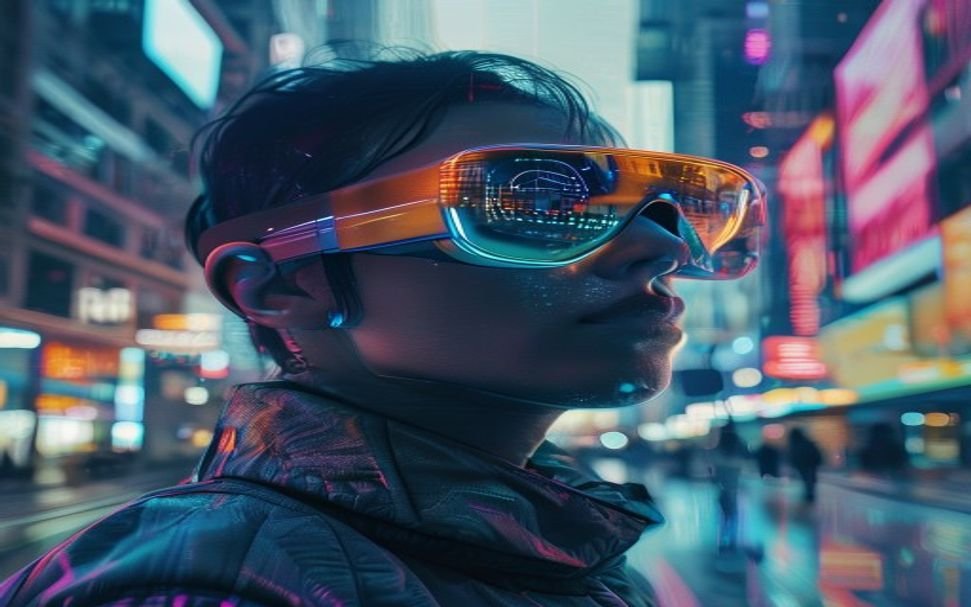

# Smart Glasses 2026: Why XR Is Having Its iPhone Moment
On June 26, 2026, XREAL took the stage at MWC Shanghai and confirmed what the tech industry had been anticipating for years: real smart glasses — the kind you can actually wear all day — are finally shipping. The XREAL Aura, running Google’s Android XR operating system and powered by Qualcomm’s new Snapdragon Reality Elite chip, delivers a 70-degree see-through field of view in a package that weighs under 95 grams. That is wider than any consumer AR glasses on the market, in a form factor light enough to forget you are wearing them.
It was not a flashy keynote moment. But in the history of extended reality — the umbrella term covering augmented reality (AR), virtual reality (VR), and mixed reality (MR) — it may turn out to be a hinge point as significant as the first iPhone. Smart glasses in 2026 are no longer a futurist promise. They are a product category with multiple competing devices, a maturing platform ecosystem, and use cases that go far beyond novelty.
Here is what is happening, who is building it, and what it actually means for the way we live and work.
What Is Extended Reality and Why 2026 Is Different
Extended reality (XR) is a collective term for technologies that overlay digital information on the real world (augmented reality), replace the real world with a digital environment (virtual reality), or blend both (mixed reality). Smart glasses are the hardware form factor that many believe will make XR a daily-use technology — the way smartphones made the internet a daily-use technology.
The XR market reached an estimated $20.43 billion in 2025 and is forecast to grow to $59.18 billion by 2031 at a 40.95% compound annual growth rate, according to Treeview’s XR Industry Statistics Report 2026. That growth rate is extraordinary — and it is being driven by something concrete: for the first time, multiple major technology companies are shipping smart glasses products simultaneously, building on a shared platform.
What makes 2026 genuinely different from previous years of XR hype is the arrival of Android XR. Announced by Google and Samsung in late 2024 and launched in late 2025, Android XR is the first operating system specifically designed for both XR headsets and smart glasses, built with Gemini AI integrated at the system level. It gives developers a single target platform, device makers a ready-built OS layer, and consumers a familiar ecosystem. That kind of infrastructure is what transforms niche hardware into a mass-market product category.
The Android XR Ecosystem: Google’s Platform Play
The architecture behind the current smart glasses surge is built on a three-way partnership between Google, Samsung, and Qualcomm — described by analysts as a “trilateral alliance designed to create a vertically integrated yet open ecosystem for spatial computing.”
Google provides the operating system: Android XR is an AI-powered OS that blends digital information with the real world. Crucially, Gemini is integrated at the system level — not as an app users launch, but as an ambient assistant that understands what the wearer sees and hears, and responds accordingly. Live translation, navigation overlays, real-time contextual answers, and proactive reminders all happen through the glasses without requiring the user to pull out a phone.
Samsung provides the hardware credibility and manufacturing scale. The Galaxy XR headset, launched at $1,799, established the premium end of the platform — and Samsung has now confirmed that Android XR smart glasses (conventional-looking, not a bulky headset) are shipping in Fall 2026. According to Samsung’s UK Newsroom, the Galaxy XR is already available in the UK following US and South Korean launches, with the smart glasses form factor expected to follow. Early specifications point to a 12MP autofocus camera, gesture-based controls, 50-gram weight, and deep Gemini integration.
Qualcomm provides the silicon. The Snapdragon Reality Elite chip powering the XREAL Aura is a new entrant that was specifically designed to handle the edge AI processing XR glasses require — keeping computation on-device for low latency and better privacy rather than routing everything through the cloud.
By the end of 2026, at least five Android XR devices are expected to launch, including:
- Samsung Galaxy XR smart glasses (Fall 2026)
- XREAL Aura — 70-degree AR glasses (Fall 2026, under $1,500)
- Flat-AR display glasses from Samsung and Xreal
- Non-display AI glasses from Warby Parker (in collaboration with Android XR partners)
- Fashion-first glasses from Gentle Monster
The scale of this coordinated rollout has no parallel in XR history. It is the difference between a single company betting on a category versus an entire platform ecosystem activating simultaneously.
Who Else Is Competing: Meta, Apple, and the Smart Glasses Race
Android XR is not entering an empty field. The competitive landscape in smart glasses 2026 involves at least three distinct platform ecosystems.
Meta’s Head Start
Meta Platforms holds 74.6% of the XR market share and remains the category leader. Its Ray-Ban Meta smart glasses — which look like ordinary sunglasses — have sold more than 2 million units, with sales tripling in Q2 2025. Meta’s strategy has been to prioritize form factor and price: Ray-Ban Meta glasses retail for $299, are genuinely stylish, and offer voice-activated AI assistance and built-in cameras without any bulky display hardware. For most users in 2025 and early 2026, Ray-Ban Meta is the default answer to “which smart glasses should I buy?”
Apple’s Pivot
Apple’s position has become more complex. The Vision Pro, launched in early 2024 at $3,499, sold approximately 475,000 units by end of 2025 — impressive for an ultra-premium product but far below the volumes needed to make it a platform. More significantly, Gizmodo reported that Apple’s Vision Pro team was recently disbanded, with engineers reassigned to AI smart glasses and Siri development. Apple appears to be acknowledging that the market’s direction is glasses — lightweight, daily-wear, AI-integrated — rather than high-end headsets.
The New Challengers
According to Road to VR, XREAL Aura is the first wearable platform to deliver the full Android XR experience in an optical see-through glasses form factor — making it the first direct Android XR competitor to Ray-Ban Meta in the glasses category specifically. By year end, analysts project that the competitive dynamic shifts from “Meta versus the rest” to a three-way race between the Meta ecosystem, the Android XR ecosystem, and Apple.
Real-World Use Cases That Are Already Working
The use case question — “but what do you actually do with them?” — is one that XR has struggled to answer convincingly for a decade. In 2026, the answers are finally more concrete.
Healthcare and Medical Training
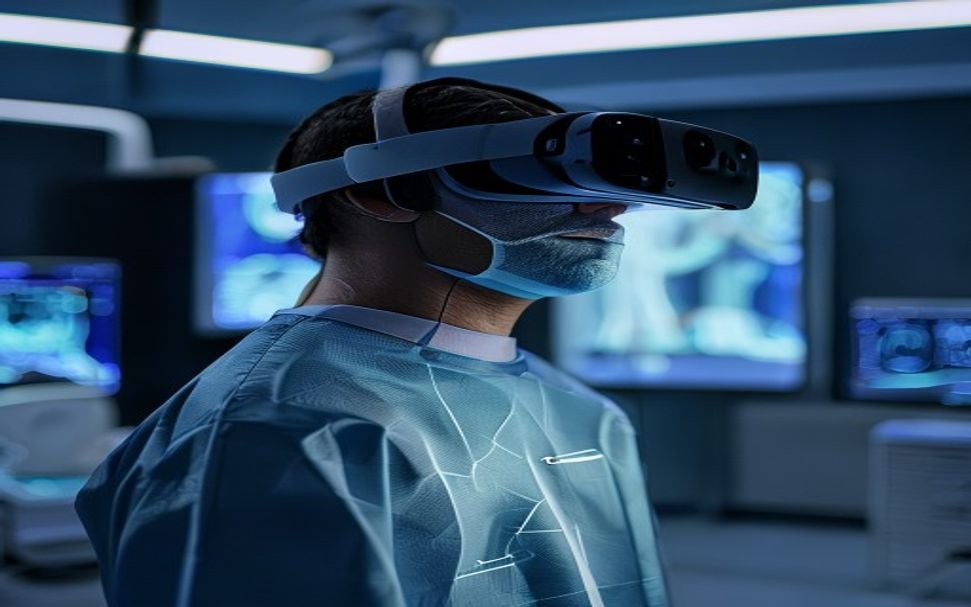
XR’s impact on healthcare is among the most documented. Treeview’s healthcare XR report documents that VR training is reported to be four times more effective than in-person training, with trainees showing 275% higher confidence rates. Real deployments include:
- Visage Imaging on Apple Vision Pro: A spatial radiology workstation that allows radiologists and surgeons to review medical imaging hands-free in mixed reality
- Medtronic’s Micra XR Trainer: A shared AR session where a cardiologist and clinical educator jointly examine a 3D model of a pacemaker from separate locations
- Institutions including Stanford Medicine and the Mayo Clinic have integrated XR modules into surgical training curricula
Navigation and Live Translation
Samsung’s smart glasses prototype has already demonstrated real-time live translation and navigation overlays tested in real environments. Gemini integration means the glasses can translate spoken conversation into text overlays in the user’s field of view, or project turn-by-turn directions without requiring the user to look at their phone. These are not demos — they are shipping features in the Samsung Galaxy XR headset, and will carry over to the glasses form factor.
Enterprise Training and Operations
In logistics and manufacturing, AR headsets for “pick-by-vision” and maintenance tasks have measurable ROI. In construction and energy, XR overlays reduce errors and keep workers out of hazardous situations by surfacing real-time safety data in their field of view. The enterprise market was the first to see serious XR adoption, and it remains the sector with the clearest return-on-investment story.
The Privacy Problem That Will Define the Category
The most significant unresolved challenge in smart glasses 2026 is not technical — it is privacy.
Camera-equipped glasses that are indistinguishable from ordinary eyewear create a recording capability that bystanders have no way to identify or consent to. The industry’s defense rests on three arguments: LED recording indicators provide notice, users bear responsibility for misuse, and the AI utility justifies the tradeoff.
Privacy researchers are unconvinced. A 2024 ACM study cited in TechTimes’ analysis followed 15 camera glasses wearers and found that “the more convincingly a device resembles standard eyewear, the more effectively it conceals its recording capability from bystanders.” Participants rated LED indicators as ineffective and reported feeling emotionally burdened by responsibility for bystander privacy.
European regulators have already questioned whether an LED indicator constitutes adequate notice when most bystanders do not know what it signals. If formal regulatory action follows in 2026 or 2027, it could require visible safeguards, default-off recording modes, or mandatory data disclosures that would reshape the product roadmaps of every Android XR partner simultaneously.
Pricing is the other near-term risk. At $299, Ray-Ban Meta glasses are impulse-buy territory. At $1,500, XREAL Aura competes with entry-level laptops for discretionary spending. Battery life remains a persistent complaint — most display-capable glasses still deliver two to four hours of active use before needing a charge.
What This Means for You
Extended reality is no longer an enterprise-only technology or a VR gaming niche. The convergence of mature AI, smaller chips, and the Android XR platform has created conditions for mainstream adoption in the same way that 3G connectivity and the App Store created conditions for the smartphone era.
If you are a business owner or manager, the near-term opportunity is in training and field operations — particularly if your industry involves hands-on work where accessing information hands-free has real value. Healthcare, manufacturing, logistics, and construction are all seeing documented ROI from XR deployments today.
If you are a developer, Android XR provides a single development target that, by end of 2026, will run across five or more distinct device form factors from multiple manufacturers. The addressable market for Android XR apps is scaling fast.
If you are a consumer, the practical question in late 2026 will be whether to buy into the Ray-Ban Meta ecosystem (proven, affordable, no display) or wait for Samsung and XREAL Aura smart glasses (display-capable, AI-native, launching Fall 2026 at $1,500).
Looking Ahead
The back half of 2026 will be the most significant period in XR history. Samsung’s Android XR smart glasses, the XREAL Aura, and multiple other form factors are all scheduled to land in the same six-month window. Meta is expected to respond with an updated Ray-Ban platform announcement. Apple’s AI glasses project — whatever form it takes — will likely be teased before the end of the year.
Two things will determine whether this wave of hardware becomes a genuinely transformative platform or the latest in a long line of XR false starts: battery life and privacy. If Fall 2026 devices can deliver all-day wear (eight-plus hours) without sacrificing the AI features that justify the price, and if the industry can articulate a credible privacy framework that regulators accept, 2026 may indeed be remembered as the year spatial computing grew up.
The iPhone moment, if it arrives, will not look like the iPhone launch. It will look like a lot of people wearing ordinary-looking glasses that happen to understand the world around them — and being mildly surprised that they stopped noticing they had them on.
Sources
- XREAL AURA Brings 70-Degree Android XR Glasses to MWC Shanghai — TechTimes
- A New Era of XR Begins: XREAL Launches XREAL AURA — PRNewswire
- Samsung Galaxy XR Arrives in the UK — Samsung Newsroom UK
- Intelligent Eyewear with Gemini is Coming This Fall — Google Blog
- XR & Smart Glasses Market Statistics Report 2026 — Treeview
- Smart Glasses Face a Privacy Reckoning — TechTimes
- VR and AR in Healthcare: 65+ Real-World Use Cases — Treeview
- First AR Glasses Running Android XR Confirmed for 2026 Launch — Road to VR
- Samsung’s Galaxy XR Is the Future of Wearables — Gizmodo
- Android XR — Wikipedia