

AI Phishing Defense: How Businesses Can Stop Deepfake Fraud and Smarter Social Engineering
AI phishing defense has become a practical business priority in 2026 because the threat has changed shape. Attackers no longer need perfect English, custom malware, or months of reconnaissance to run convincing campaigns. Generative AI can help them write believable messages, clone executive voices, summarize stolen inboxes, create fake meeting context, and scale social engineering across employees, vendors, and customers.
That does not mean every phishing email is now powered by advanced AI. It means the cost of convincing deception is falling. The result is a bigger problem for businesses: traditional awareness training and password-based security cannot carry the full load anymore.
The Federal Bureau of Investigation has warned that criminals use generative AI to facilitate financial fraud, including synthetic text, images, audio, and video. The FBI’s Internet Crime Complaint Center also continues to rank business email compromise and investment fraud among the most damaging online crime categories. For technology leaders, finance teams, and managed service providers, the lesson is clear: identity, payment approval, and vendor communication workflows need stronger verification.

Why AI-Powered Phishing Is Different
Classic phishing relied on obvious pressure tactics: strange grammar, generic greetings, suspicious links, and urgent payment demands. Those clues still matter, but they are less reliable.
Generative AI changes phishing in four important ways.
First, it improves language quality. Attackers can produce localized messages, rewrite scams in a company’s tone, and remove the spelling mistakes that once helped employees spot fraud.
Second, it makes personalization cheaper. A criminal can scrape LinkedIn, public websites, breach data, and vendor records, then generate messages that refer to real projects, roles, tools, or events.
Third, it strengthens impersonation. Deepfake voice and video can make a fake approval request feel more trustworthy, especially when the target is under time pressure.
Fourth, it accelerates iteration. Attackers can test subject lines, landing pages, and lure themes quickly. Phishing-as-a-service kits already made campaigns easier to run; AI makes the content and timing more adaptive.
The biggest shift is not just technical. It is operational. A phishing attempt can now look like a normal business conversation.
The Real-World Business Impact
AI phishing defense matters because the target is rarely just one employee account. The real target is a business process: invoice approval, payroll changes, cloud access, help desk resets, vendor onboarding, wire transfers, or customer data exports.
For a small business, one compromised mailbox can lead to fake invoices, stolen client data, and damaged trust. For a mid-sized enterprise, attackers may use one account to access SaaS systems, change payment details, or move laterally through shared documents and chat platforms. For service providers, a single technician account can become a path into multiple customers.
The business impact usually appears in five areas:
- Direct financial loss from fraudulent payments or payroll diversion
- Operational disruption from account takeovers and incident response
- Data exposure when attackers search inboxes, files, and customer records
- Compliance risk if regulated information is accessed or exfiltrated
- Reputation damage when customers or partners receive scams from a trusted account
This is why AI phishing defense should not sit only inside the security team. Finance, HR, procurement, legal, IT, and executive assistants all own workflows attackers try to manipulate.
Attack Patterns to Watch in 2026
Deepfake Approval Fraud
Deepfake fraud is most dangerous when it targets high-trust moments. A finance employee may receive a voice note that sounds like a senior executive. A vendor manager may join a short video call with a person who appears familiar. A help desk worker may hear a convincing caller asking for an MFA reset.
The defense is not to ask employees to become deepfake experts. Most people cannot reliably detect synthetic media under pressure. The better defense is process design: high-risk requests must require out-of-band verification through a known channel, not the same channel where the request arrived.

Device-Code and OAuth Phishing
Some attacks do not ask for a password at all. Device-code phishing tricks users into entering a legitimate authentication code on a real identity provider page, allowing attackers to authorize a session elsewhere. OAuth consent attacks work similarly by persuading users to grant a malicious app access to mail, files, or contacts.
These techniques are dangerous because they can bypass weak training assumptions. The page may be real. The login may look normal. The failure is in the flow and permissions.
Businesses should restrict device-code flow where it is not needed, monitor unusual OAuth consent grants, require admin approval for risky app permissions, and alert on impossible travel or unfamiliar client applications.
Phishing-as-a-Service Kits
Phishing-as-a-service platforms package landing pages, reverse proxies, hosting, message templates, and credential capture into reusable kits. Some kits can capture session cookies or MFA tokens if the organization still relies on phishable factors such as SMS codes, email codes, or push approvals.
The practical takeaway is that MFA is necessary but not always sufficient. Phishing-resistant authentication, such as passkeys and hardware security keys, is now a serious control for high-risk users.
Vendor and Invoice Impersonation
Attackers often avoid technical defenses by exploiting trust between companies. A fake invoice may reference a real project. A message may come from a compromised supplier account. A request to change bank details may arrive during a normal procurement cycle.
Controls should focus on the process: verified vendor master data, dual approval for payment changes, callback rules using stored phone numbers, and automated alerts for new bank accounts or unusual payment timing.
What Effective AI Phishing Defense Looks Like
AI phishing defense is not one product. It is a layered operating model that reduces the chance of deception becoming action.
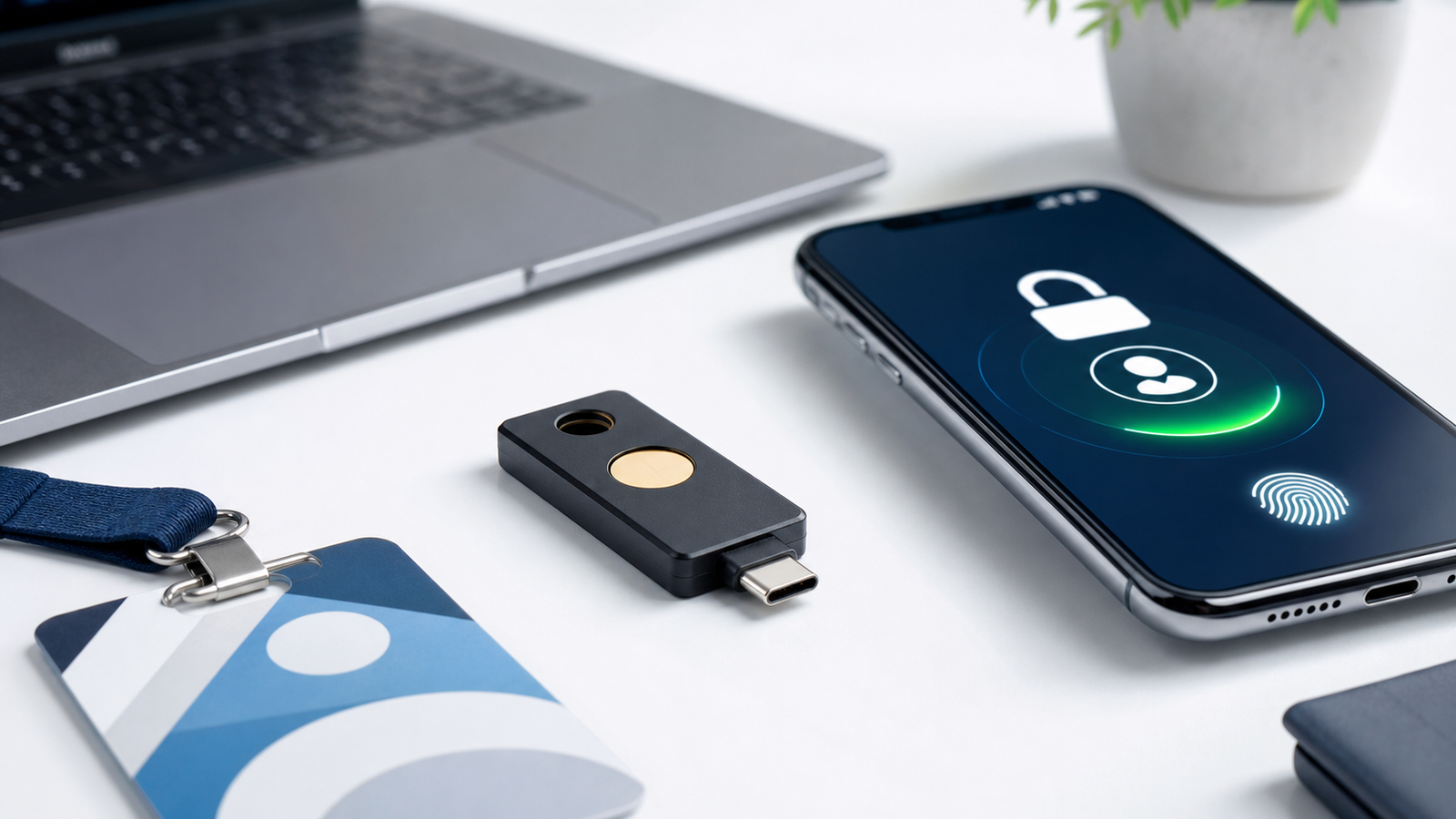
1. Move High-Risk Users to Phishing-Resistant MFA
Start with executives, finance, HR, IT administrators, developers, and help desk staff. These groups can approve payments, reset accounts, access sensitive records, or change infrastructure.
Passkeys and FIDO2 hardware security keys are stronger than one-time codes because they bind authentication to the legitimate website. NIST’s digital identity guidance emphasizes authenticator strength, verifier impersonation resistance, and replay resistance. For business users, the simple version is this: stop depending on factors that can be typed into a fake flow.
2. Redesign Payment and Account-Change Workflows
Any process involving money, credentials, payroll, supplier records, or customer data should have a known-channel verification step. That means employees verify requests using a stored phone number, approved ticketing workflow, or internal directory, not a number or link included in the suspicious request.
Good controls include:
- Dual approval for new vendors, bank changes, and large payments
- Mandatory call-backs for urgent executive requests
- Separation between request creation and approval
- Alerts when supplier payment details change
- Delayed execution windows for unusual transfers
These controls may feel slower, but they are cheaper than recovering from a fraudulent transfer.
3. Harden Email, Identity, and SaaS Telemetry
Security teams need visibility across email, identity, endpoint, and SaaS systems. A phishing attack may begin in email, but the real evidence appears in login logs, OAuth grants, mailbox rules, file access, and device posture.
Practical monitoring should include:
- New inbox forwarding rules or suspicious mailbox delegation
- Logins from new geographies, unfamiliar devices, or risky clients
- OAuth apps requesting broad mail or file permissions
- Repeated MFA prompts, push fatigue, or unusual device-code activity
- Downloads or searches across many customer or finance records
The goal is not to alert on everything. The goal is to connect signals quickly enough to contain a compromised account before it becomes a payment event or data breach.
4. Train Employees on Workflows, Not Just Red Flags
Old training often told employees to look for spelling mistakes and strange links. That is still useful, but it is not enough for AI-written messages and deepfake calls.
Training should focus on decisions employees actually make:
- How to verify a payment request
- How to handle a password or MFA reset request
- How to report a suspicious executive instruction
- How to challenge an urgent vendor change
- How to pause without being punished for slowing down a risky request
The cultural point matters. If employees believe speed is valued more than verification, attackers will exploit that.
5. Build Incident Playbooks for Account Takeover
When a phishing incident happens, teams need a playbook that moves fast. Waiting until after the first confirmed loss is too late.
A practical account-takeover playbook should cover:
- Disable or contain the account
- Revoke sessions and refresh tokens
- Reset credentials and rotate recovery methods
- Review mailbox rules, OAuth grants, and delegated access
- Search for suspicious messages sent from the account
- Notify affected customers, partners, or internal teams when needed
- Preserve evidence for legal, insurance, and law enforcement reporting
For businesses without a full security team, a managed service provider can package this into a repeatable response service.
Opportunities for Businesses and Service Providers
The rise of AI phishing creates defensive opportunities too.
Managed service providers can help customers implement passkeys, review conditional access policies, monitor mailbox rules, and test payment verification workflows. Cybersecurity startups can build better tools for identity threat detection, deepfake-risk workflows, vendor payment monitoring, and SaaS permission governance.
Internal IT teams can also show quick value. A 30-day program might move executives and finance users to phishing-resistant MFA, remove unused OAuth permissions, add callback rules for vendor changes, and run a tabletop exercise for a deepfake payment request.
The best projects are practical and measurable. Track reduced phishable MFA coverage, fewer risky app permissions, faster account containment, and fewer unverified payment changes.
Risks and Tradeoffs
AI phishing defense has tradeoffs. Stronger authentication can frustrate users if rollout is rushed. Payment approval controls can slow legitimate work. Monitoring can create privacy and labor concerns if policies are unclear. Deepfake detection tools may produce false confidence if they are treated as a final answer instead of one signal.
The answer is governance. Use NIST Cybersecurity Framework 2.0 to organize ownership around govern, identify, protect, detect, respond, and recover. Define who owns identity policy, who approves exceptions, who reviews payment process changes, and who decides when an incident becomes a legal or customer notification issue.
Security should not depend on heroic employees spotting every fake. It should depend on systems that make dangerous actions harder to complete without verification.
What Readers Should Watch Next
Watch for three developments over the next year.
First, phishing-resistant MFA will move from a best practice to a baseline expectation for high-risk roles. Passwords plus one-time codes will look increasingly weak for executives, administrators, and finance teams.
Second, attackers will keep targeting identity flows that users trust: OAuth consent, device-code login, help desk resets, and collaboration tools. Businesses should monitor authentication paths, not just inboxes.
Third, deepfake fraud will push more companies to redesign approvals. The winning control will not be “spot the fake face.” It will be verified workflow, known-channel confirmation, and clear escalation.
AI phishing defense is ultimately about reducing the gap between trust and action. The message can sound convincing. The face can look familiar. The process still needs to ask: should this action be allowed, verified, logged, and approved?
FAQ
What is AI phishing defense?
AI phishing defense is the set of controls businesses use to stop phishing campaigns that rely on generative AI, synthetic media, personalization, phishing kits, or identity-flow abuse.
Is regular MFA enough to stop AI phishing?
Not always. MFA helps, but SMS codes, email codes, and push approvals can still be phished or abused. Passkeys and hardware security keys provide stronger phishing resistance.
How can businesses reduce deepfake fraud risk?
Use known-channel verification for high-risk requests, require dual approval for payments and account changes, train employees to pause, and document escalation paths.
Which teams should get stronger controls first?
Start with executives, finance, HR, IT administrators, developers, help desk staff, and anyone who can approve payments, reset access, or export sensitive data.
Sources
- FBI IC3: Criminals Use Generative Artificial Intelligence to Facilitate Financial Fraud
- FBI Internet Crime Complaint Center: 2025 Internet Crime Report
- Microsoft Security: Storm-2372 Conducts Device Code Phishing Campaign
- NIST Cybersecurity Framework
- NIST SP 800-63B Digital Identity Guidelines: Authentication and Authenticator Management
- CISA Secure by Design