


The devices around you are no longer just watching. In 2026, the Internet of Things has crossed a critical threshold — your connected machines don’t just collect data anymore. They analyze it, make decisions, and take action, all without waiting for a human to step in.
The term for this shift is AIoT — Artificial Intelligence of Things — and it describes the convergence of AI intelligence with IoT infrastructure. With more than 25 billion connected devices active globally in 2026 and a market valued at over $1 trillion, the transition from “smart” devices to genuinely autonomous ones is no longer on a roadmap. It is happening in factories, hospitals, supply chains, and homes right now.
In this article, we break down what AIoT actually means in plain language, which industries are already seeing measurable results, who the key players are, what the risks look like, and why this shift matters for anyone who runs a business or simply uses technology.
What Is AIoT? A Plain-Language Overview
The Internet of Things (IoT) is the network of physical devices — sensors, cameras, machines, wearables, and appliances — that connect to the internet and share data. Most people already live with IoT without thinking about it: a smart thermostat, a fitness tracker, a Wi-Fi security camera, or a connected industrial machine on a factory floor are all IoT devices.
AIoT takes this further. It embeds artificial intelligence directly into the IoT stack, so devices don’t just report what is happening — they interpret it and respond.
The difference matters in practice. A traditional IoT sensor on a factory machine reports a temperature spike to a dashboard, where a human reviews it and decides what to do. An AIoT system detects the same spike, compares it to historical failure patterns, predicts that a bearing will fail within 48 hours, and automatically schedules a maintenance workflow — before the machine breaks and takes a production line offline.
According to TechTarget’s AIoT definition, the goal of AIoT is to create more efficient IoT operations, improve human-machine interactions, and enhance data management and analytics. But the 2026 version of that definition has expanded significantly: AIoT is now as much about autonomous action as it is about analysis.
How It Works (Without the Jargon)
AIoT systems have three layers working together. First, devices — physical sensors and actuators that interact with the world, measuring temperature, pressure, location, biometrics, or motion. Second, edge computing — processing units located close to devices that analyze data locally, without needing to send everything to a remote cloud server, which reduces latency and keeps critical systems running even when connectivity is interrupted. Third, cloud AI — where larger models handle complex pattern recognition, historical learning, and coordination across thousands of devices simultaneously.
Think of it like a factory floor supervisor with a radio: the supervisor handles routine decisions on the floor using local knowledge (edge), but calls headquarters when complex judgment is needed (cloud). The key is that most decisions can happen locally, quickly, without waiting.
Why AIoT Is Trending Right Now
The global IoT market crossed $1.05 trillion in 2026, according to Fortune Business Insights, and several forces are driving this momentum simultaneously.
Key developments as of July 2026:
- 25 billion connected devices now online. Growing from 21.1 billion at the end of 2025 — a 14% year-over-year increase — every new device is a potential real-time data source for an AI system, according to IoT Analytics.
- 5G-Advanced and Wi-Fi 7 deployment. The focus in 2026 has shifted from peak bandwidth to consistency. These new wireless standards deliver the predictable, low-latency connections that industrial automation, connected healthcare, and autonomous logistics require, as documented in Telefónica Tech’s 2026 IoT Trends Report.
- Edge AI chips becoming economical. The cost of running AI models directly on IoT devices has dropped sharply. Specialized chips from Qualcomm, Intel, and Arm now make it practical to deploy neural networks on industrial controllers, medical wearables, and smart cameras without cloud dependency.
- Physical AI crossing from labs into production. The defining shift of 2026 is from IoT as observational infrastructure to IoT as operational infrastructure. Devices don’t just sense anymore — they act. Autonomous supply chains, self-scheduling maintenance systems, and AI-driven energy management are all live deployments, not prototypes.
Real-World Applications You Should Know About
The hardest question for IoT technology has always been: is this actually working, or is it still a pilot? In 2026, the answer has shifted. Here are three sectors where AIoT is delivering documented, measurable results.
Smart Manufacturing: Machines That Fix Themselves
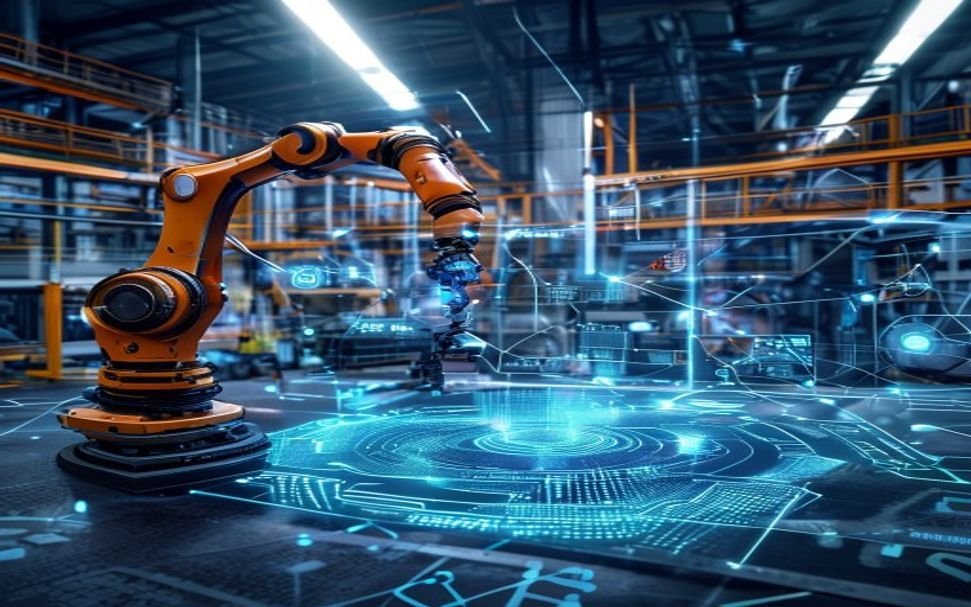
Manufacturing is where AIoT has made its deepest commercial impact. Industrial machines equipped with IoT sensors continuously monitor vibration, temperature, pressure, and operational performance. That data flows to edge AI systems that calculate failure probability in real time and trigger maintenance workflows automatically — no dispatcher, no delay.
According to RT Insights’ 2026 Smart Manufacturing Trends Report, organizations implementing IoT and automation report up to 15% gains in production capacity and 7–20% improvements in workforce productivity. Companies like Siemens and Robert Bosch GmbH operate smart factories where downtime is scheduled around AI predictions — rather than discovered when something breaks unexpectedly. Siemens’ MindSphere platform alone connects millions of factory machines globally, with AI-driven predictive maintenance as its flagship deployment.
Healthcare: Patients Monitored Around the Clock
Healthcare IoT in 2026 means continuous monitoring outside hospital walls. Wearable devices track heart rate, oxygen saturation, blood glucose, and blood pressure in real time, feeding a continuous data stream to AI-assisted platforms that generate early warnings for critical conditions — often before a patient feels symptoms.
Hospitals also use IoT asset tracking to reduce loss and improve care delivery. RFID tags on equipment like infusion pumps, wheelchairs, and diagnostic devices enable real-time location systems that reduce equipment search time by up to 75%, according to Hashstudioz’s IoT Industry Use Cases Report, directly improving patient care by ensuring critical assets are available when needed.
Supply Chain and Logistics: Disruptions That Fix Themselves
In 2026, leading supply chains operate as event-driven systems where disruptions automatically trigger corrective actions. A delayed shipment initiates rerouting. A temperature deviation in a cold-chain truck generates an alert and a backup routing decision. An inventory threshold triggers restocking orders — all without waiting for a human review cycle.
GPS, RFID, and environmental sensors enable continuous tracking of goods across thousands of miles. Combined with AI logistics platforms, these systems reduce human coordination overhead while improving reliability — a combination that is particularly valuable for pharmaceutical and food supply chains where temperature and timing compliance carry legal and safety implications.
Key Players You Should Know
The AIoT ecosystem spans chip makers, cloud platform providers, industrial manufacturers, and device companies. The companies shaping the space in 2026:
- Microsoft — Azure IoT Hub and Azure Digital Twins power enterprise-scale AIoT deployments, connecting industrial machines, buildings, and logistics networks to cloud AI analytics and real-time dashboards.
- Amazon Web Services — AWS IoT Greengrass enables edge AI inference directly on connected devices, with seamless integration into Lambda, SageMaker, and Kinesis for data pipelines at scale.
- Siemens — A global leader in industrial IoT, Siemens’ MindSphere platform connects millions of machines across manufacturing, energy, and infrastructure worldwide, with AI-driven predictive maintenance as the primary value proposition.
- Google (Alphabet) — Google Cloud IoT and the Android ecosystem — increasingly extended to embedded and edge devices — position Google as a key player across both enterprise and consumer AIoT use cases.
- Intel Corporation — Intel’s IoT chipsets and the OpenVINO toolkit enable AI inference on edge devices across manufacturing, retail, and transportation, bringing model execution closer to the data source.
- Robert Bosch GmbH — One of the world’s largest IoT sensor manufacturers, Bosch produces the hardware backbone for smart factories, connected vehicles, and building automation systems globally.

Challenges and What Critics Say
AIoT’s momentum is real — but so are its problems, and they are getting harder to ignore as the device count grows.
The most pressing challenge is security at scale. With IoT devices surpassing 25 billion in 2026, the attack surface has grown faster than the security programs managing it. Many devices use default factory credentials, lack firmware update mechanisms, and transmit sensitive data without encryption. According to Device Authority’s 2026 State of IoT Identity Security report, many organizations operate with limited visibility into what devices are even connected to their networks — with shadow IoT, legacy systems, and rapidly scaled edge infrastructure creating sprawling device estates that are difficult to inventory, let alone secure.
AI is making the threat surface more dangerous, not less. 87% of surveyed respondents in a 2026 security study identified AI vulnerabilities in IoT as an increasing cybercrime risk — ranking ahead of ransomware as a top concern, according to IoT Insider. Criminals are using AI to scan for vulnerable IoT endpoints at scale, manipulate autonomous systems through adversarial inputs, and exploit gaps across distributed device networks.
Data privacy is the other unresolved question. AIoT devices collect intimate data about health, location, behavior, energy use, and daily routines. Without standardized privacy frameworks across manufacturers and jurisdictions, consumers typically have limited visibility into where that data goes, who processes it, and how long it is retained. European regulators have begun pushing for stricter disclosure requirements, but globally, the regulatory picture remains fragmented.
Critics also note that much of AIoT’s ROI story depends on deployment quality. Poor sensor placement, inadequate training data for AI models, and integration gaps between legacy systems and modern IoT platforms have caused numerous industrial pilots to stall before reaching full production.
What This Means for You
AIoT’s practical implications vary significantly depending on your role.
If you run a business with physical operations — manufacturing, logistics, retail, agriculture, or healthcare — AIoT offers some of the clearest ROI in the current technology landscape. Predictive maintenance typically pays back in reduced downtime alone. The key decision is not whether to adopt AIoT but which use case to start with: asset tracking, energy optimization, and equipment condition monitoring all have documented ROI profiles and manageable implementation risk. Start narrow, measure the result, then expand.
If you work in IT or cybersecurity, AIoT is your next major endpoint challenge. The number of devices connected to your network is growing faster than your team can manually track. Device visibility — knowing exactly what is connected — is the foundational step. From there, machine identity management, network segmentation for IoT traffic, and firmware lifecycle governance are the three practices with the highest immediate security impact.
As a consumer, AIoT will increasingly become invisible. Smart home devices, connected vehicles, and health wearables are already making decisions — adjusting heating, optimizing energy consumption, tracking sleep patterns — without prompting. The convenience is genuine. So is the importance of understanding what data those devices share, with which services, and under what terms.
Looking Ahead: What to Watch in 2027
The next 12 months will push AIoT further into autonomous territory. Three evidence-grounded predictions:
- Connected device count will approach 30 billion. IoT Analytics projects 21.1 billion devices at the end of 2025, growing at 14% annually. At that trajectory, 2027 brings roughly 27–28 billion devices — each one a potential edge AI node generating actionable operational data. IoT Analytics tracks this count quarterly.
- Industrial IoT investment will accelerate sharply. The industrial IoT market is forecast to reach $2.43 trillion by 2035, according to Precedence Research. The compound growth required to reach that number means major milestones in 2027 — driven by smart factory expansions in Asia-Pacific and reshoring-driven manufacturing investment in North America and Europe.
- IoT security regulation will tighten in major markets. The EU’s Cyber Resilience Act establishes baseline security requirements for connected products and is set to come into full effect in 2027. Similar frameworks are advancing in the US and UK. Manufacturers that have not yet invested in security-by-design will face both regulatory and market pressure to close the gap between the billions of devices deployed and the security standards required.
Conclusion
The most important thing to understand about IoT in 2026 is this: the era of passive sensing is over. The previous decade was about connecting devices to networks. This decade is about making those devices intelligent enough to close the loop — to sense, decide, and act.
That shift creates genuine, measurable opportunity in every industry that touches the physical world: factory floors, hospital wards, supply chains, energy grids, smart buildings, and connected transportation. It also creates real risk, particularly around security and data privacy, at a scale that will test both technology teams and the regulatory frameworks that govern them.
If you have been waiting for AIoT to prove itself before paying attention, the proof is in. The 25 billion-plus devices already deployed are generating the data. The AI systems to act on it are ready and getting cheaper. The only real question is which problems your organization will solve first.
Subscribe to our newsletter for weekly coverage of AIoT, smart devices, and the technologies reshaping how businesses operate.
Sources:
- Fortune Business Insights — Internet of Things Market Size 2026
- IoT Analytics — Number of Connected IoT Devices Growing 14% to 21.1 Billion
- Mordor Intelligence — IoT Devices Market Size & Forecast 2026–2031
- Telefónica Tech — IoT Trends 2026: Physical AI, Autonomous Mobility, IoMT
- RT Insights — Smart Manufacturing Trends 2026
- Hashstudioz — IoT Use Cases Across Industries
- Device Authority — State of IoT Identity Security 2026
- IoT Insider — Biggest IoT Security Challenges of 2026
- Precedence Research — Industrial IoT Market Size Forecast
- TechTarget — What is Artificial Intelligence of Things (AIoT)
- IoT Trends 2026: Technologies Shaping Connected Systems