

Physical AI: How Real-World Robots Are Reaching Business Operations
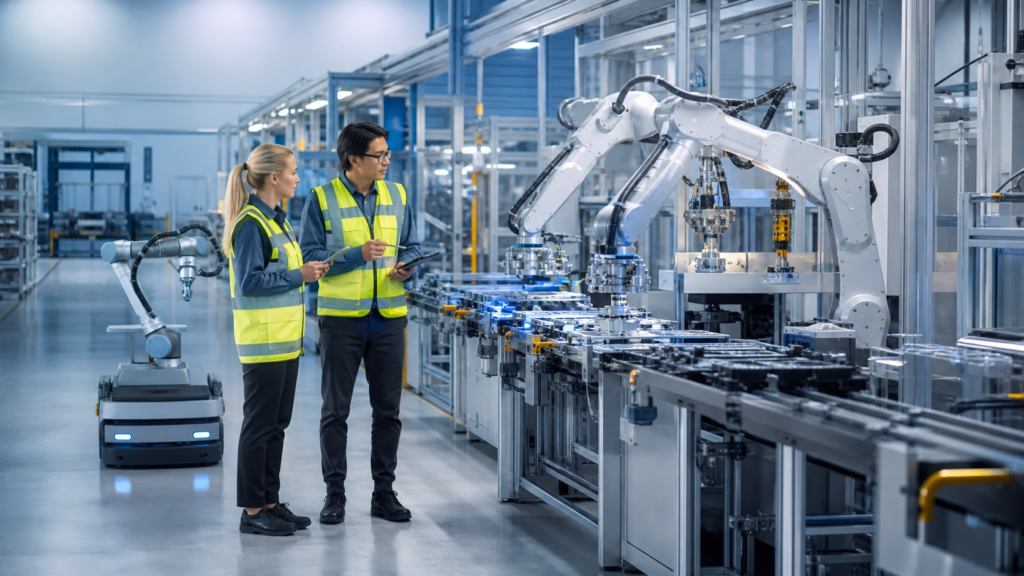
Physical AI is becoming one of the strongest technology trends of 2026 because it moves artificial intelligence out of chat windows and into machines that can sense, plan, move, inspect, carry, build, and respond to the physical world.
For years, most business AI projects lived in software: copilots, search, analytics, customer support, document automation, coding assistants, and cybersecurity tools. Physical AI is different. It combines robotics, computer vision, foundation models, simulation, edge computing, sensors, industrial controls, and safety systems so machines can perform useful work in factories, warehouses, construction sites, hospitals, farms, and energy infrastructure.
The trend is not only about humanoid robots. The more immediate business value is coming from robotic arms, autonomous mobile robots, inspection systems, construction robots, warehouse fleets, and industrial machines that become more adaptive through AI.
That distinction matters. A general-purpose humanoid may be exciting, but many companies can generate value sooner by automating a narrow, high-friction physical workflow with measurable labor, safety, quality, or uptime impact.
What Physical AI Means
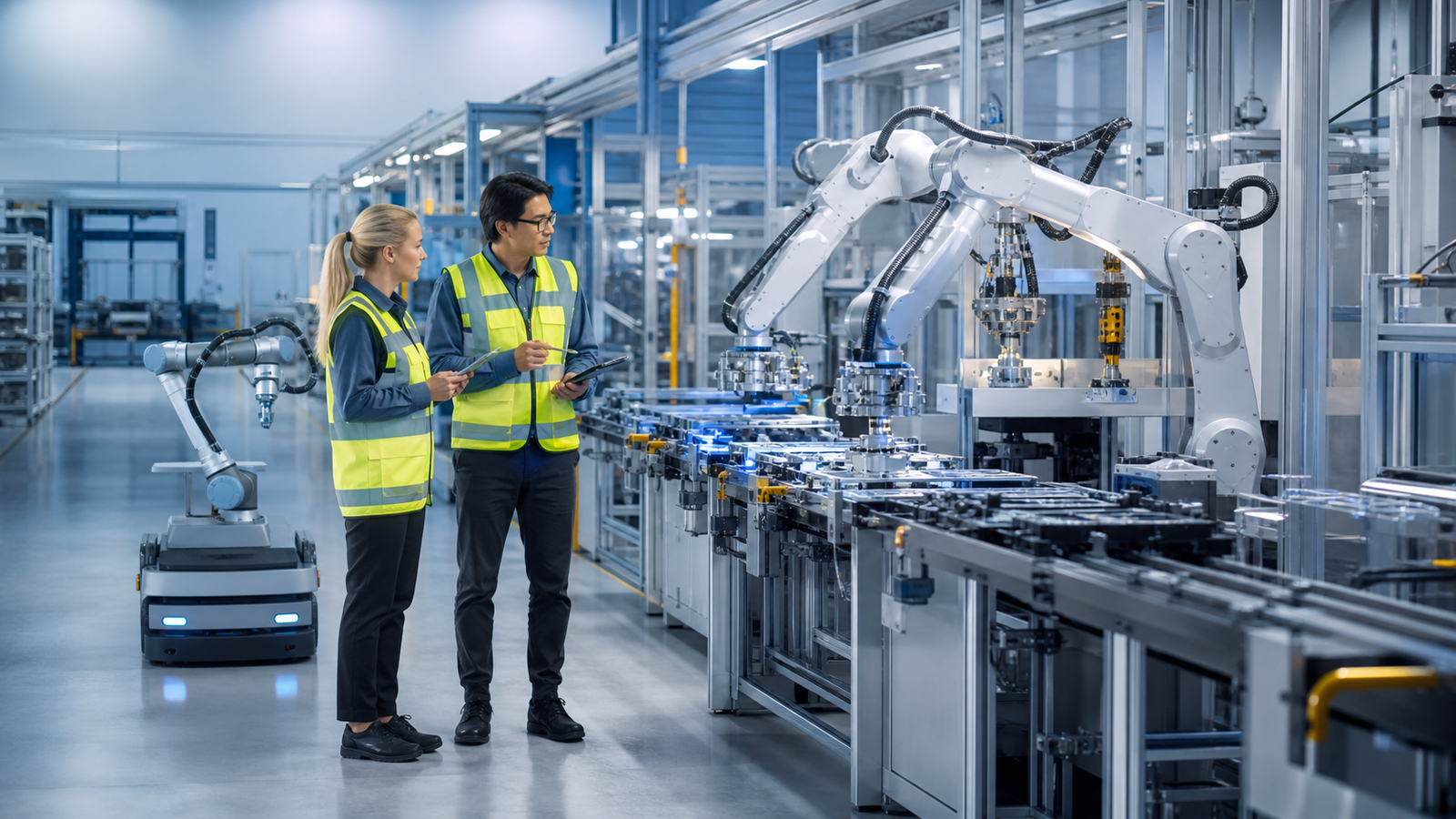
Physical AI refers to AI systems that understand and act in real physical environments. A physical AI system may use cameras, lidar, force sensors, GPS, radar, industrial controllers, digital twins, and AI models to decide what action to take next.
In practical business terms, physical AI helps machines answer questions such as:
- What is in front of me?
- Is this object safe to move?
- Where should I go next?
- Has the environment changed?
- Can I adapt without a full reprogramming cycle?
- Should I stop because a person entered the work zone?
- Can this process be simulated before it runs in production?
Traditional industrial robots are excellent at repetitive, tightly controlled tasks. They weld, place, lift, inspect, pack, and assemble with high precision. The weakness is flexibility. If the part changes, the lighting changes, the pallet is messy, the aisle is crowded, or the task requires judgment, older automation often needs reprogramming or human intervention.
Physical AI aims to make automation more adaptive. It does not remove the need for engineering, safety validation, or process design. It gives machines more context and gives operators more ways to deploy robots in environments that are not perfectly predictable.
Why Physical AI Is Trending Now
Several signals are converging at once.
First, the installed base of industrial robots is already large. The International Federation of Robotics reported that 542,076 industrial robots were installed globally in 2024, while the worldwide operational stock reached 4,663,698 units. That means physical AI is not starting from zero. It is arriving on top of a large automation market that already has buyers, integrators, suppliers, and operational pain points.
Second, robotics software is improving. NVIDIA describes robotics development as moving through training, simulation, and edge inference, with tools for robot learning, digital twins, synthetic data, and physical AI deployment. Google DeepMind’s Gemini Robotics work is another signal: the field is moving toward vision-language-action models that can connect perception, instructions, and robot actions.
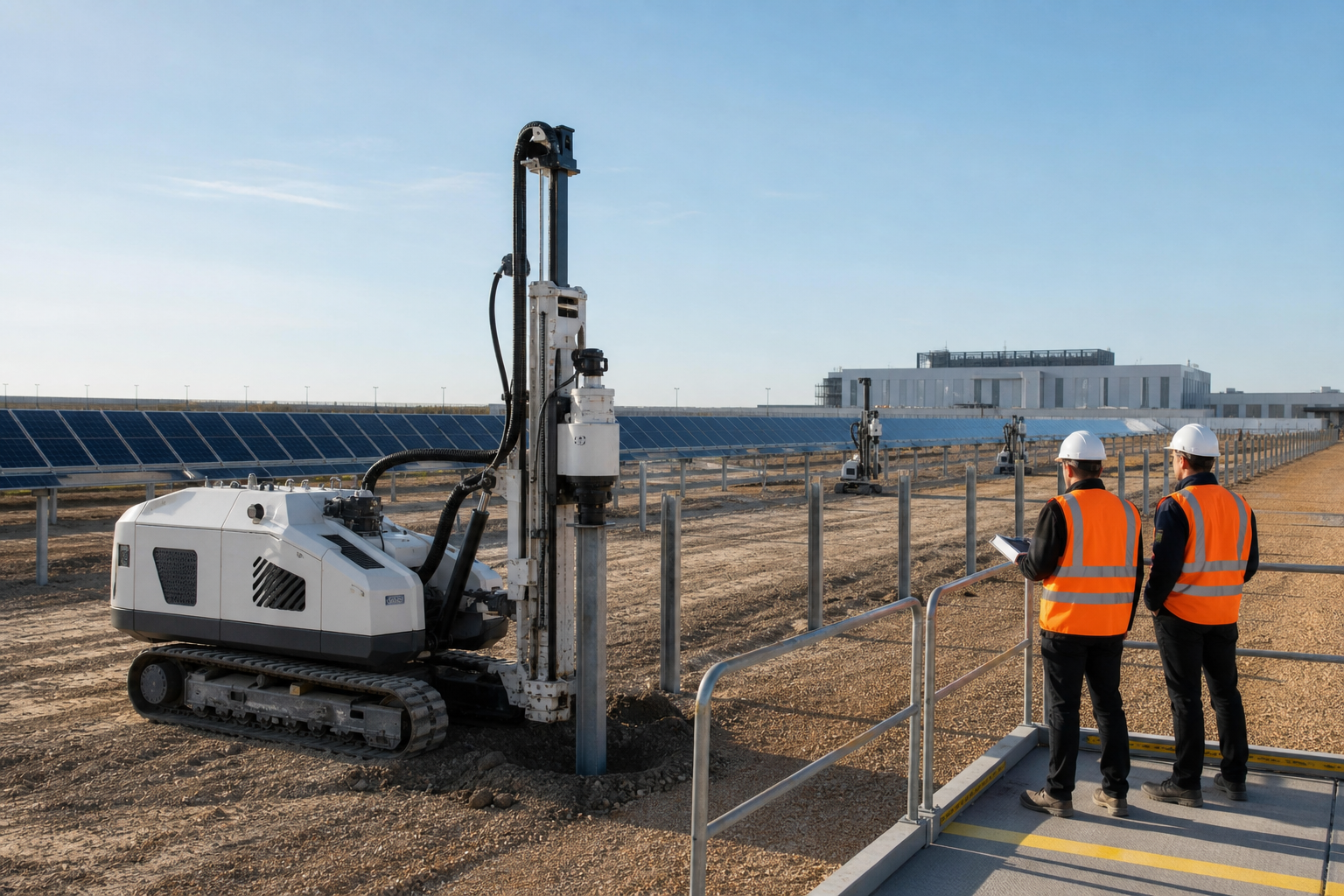
Third, real deployments are becoming easier to understand. On July 1, 2026, Business Insider reported that autonomous construction robots from Built Robotics are helping build solar infrastructure for Meta’s Hyperion AI data center project in Louisiana. The reported use case is not a showroom demo. It is repetitive, heavy, risky field work: pile driving, trenching, and related construction tasks supervised by humans from safer positions.
Fourth, labor and infrastructure pressures are real. Warehouses, factories, construction sites, utilities, farms, and healthcare facilities all face some combination of labor shortages, high turnover, safety exposure, quality requirements, and cost pressure. Physical AI becomes attractive when it helps a company keep output stable without assuming endless availability of trained workers for difficult physical tasks.
Finally, investors and platform companies are paying attention. MarketWatch reported on July 2, 2026 that NVIDIA is positioning itself around robotics and physical AI as a major growth frontier, with factory automation and self-driving technology representing nearer-term revenue than speculative humanoid deployments.
The result is a more pragmatic robotics conversation: not “When will robots do everything?” but “Which physical workflows can AI make safer, faster, more consistent, or less dependent on scarce labor?”
Real-World Applications
Smart Factories and Flexible Manufacturing
Manufacturing is the clearest starting point because robotics, process control, machine vision, and industrial engineering are already mature. Physical AI can improve:
- Visual inspection for defects, misalignment, missing parts, contamination, or packaging errors
- Robotic picking and placement when objects vary in shape, orientation, or surface texture
- Predictive maintenance using vibration, thermal, acoustic, and visual signals
- Autonomous material movement between work cells
- Digital twin testing before a production change goes live
- Human-robot collaboration with better situational awareness
The business impact is usually not one dramatic robot replacing an entire line. It is a series of targeted improvements: fewer defects, less rework, reduced downtime, faster changeovers, safer lifting, and better use of skilled technicians.
For manufacturers with high-mix production, physical AI is especially relevant. If product variants change frequently, hard-coded automation can become expensive to maintain. AI-assisted perception and simulation can reduce the engineering burden of each change.
Warehouses, Logistics, and Retail Operations
Warehouses are a strong fit because they combine repetitive movement with constant variability. Boxes differ. Aisles change. Demand spikes. Humans and machines share space. Inventory records are imperfect.
Physical AI can support autonomous mobile robots, robotic picking cells, vision-based inventory counts, trailer unloading, pallet inspection, route optimization, and safety monitoring. In retail, similar capabilities can help with shelf scanning, stockroom movement, store cleaning, and loss prevention.
The best use cases are tied to operational metrics: pick rate, travel time, missed picks, injury rates, shrink, inventory accuracy, overtime, and order cycle time. A robot that looks impressive but does not move one of those metrics is a technology demo, not a business case.
Construction, Energy, and Data Center Infrastructure
Construction is becoming a more visible physical AI market because the work is physically demanding, conditions are variable, and skilled labor is constrained. Solar farms, transmission projects, data centers, warehouses, roads, and utilities all involve repetitive field tasks that can be risky or slow.
Autonomous pile driving for solar infrastructure is a good example. The value is not simply replacing a person with a machine. The value is keeping work moving in harsh environments, moving people farther from high-risk equipment, improving consistency, and making large infrastructure buildouts less dependent on scarce crews.
Healthcare, Life Sciences, and Assisted Work
Healthcare robotics should be approached carefully because patient safety, liability, and regulation are high stakes. Still, physical AI has real applications in hospital logistics, pharmacy automation, lab sample handling, cleaning, inventory movement, assistive lifting, and remote inspection.
The near-term opportunity is often behind the scenes. A hospital robot that moves supplies, lab samples, linens, or medication carts can reduce manual burden without making clinical decisions. Lab automation can improve throughput and reduce contamination risk. Assistive devices can reduce worker strain when designed and validated properly.
The key is to separate operational robotics from clinical autonomy. The former may be practical sooner. The latter requires much deeper validation, governance, and regulatory oversight.
Agriculture, Mining, and Field Operations
Farms, mines, utilities, ports, and oil and gas sites are difficult environments for automation because they are dirty, uneven, remote, and weather-dependent. Physical AI can help machines inspect assets, spray crops, monitor livestock, move materials, map sites, and detect anomalies.
These settings benefit from edge AI because connectivity can be unreliable. A robot or autonomous machine may need to process sensor data locally, take safe actions quickly, and synchronize with cloud systems later.
Business Impact
Automation Moves From Fixed Scripts to Adaptive Workflows
The biggest business change is flexibility. Traditional automation works best when every step is predictable. Physical AI makes it more realistic to automate work where the environment changes.
That can reduce the cost of automation for companies that produce many product variants, operate dynamic warehouses, or run field work in changing conditions. It can also make robotics more useful for small and midsize businesses if integrators can package repeatable solutions.
Safety Becomes a Business Case, Not Only a Compliance Topic
Robots can remove people from dangerous or repetitive work, but they also create new hazards. NIOSH notes that robots can improve worker safety and productivity while introducing risks such as struck-by hazards, crushing, trapping, slips, trips, falls, and electrical hazards.
For business leaders, this means safety must be built into the ROI case. A physical AI project should measure not only throughput but also exposure reduction, incident risk, ergonomic strain, emergency stop design, separation zones, and worker confidence.
Digital Twins Become Operational Infrastructure
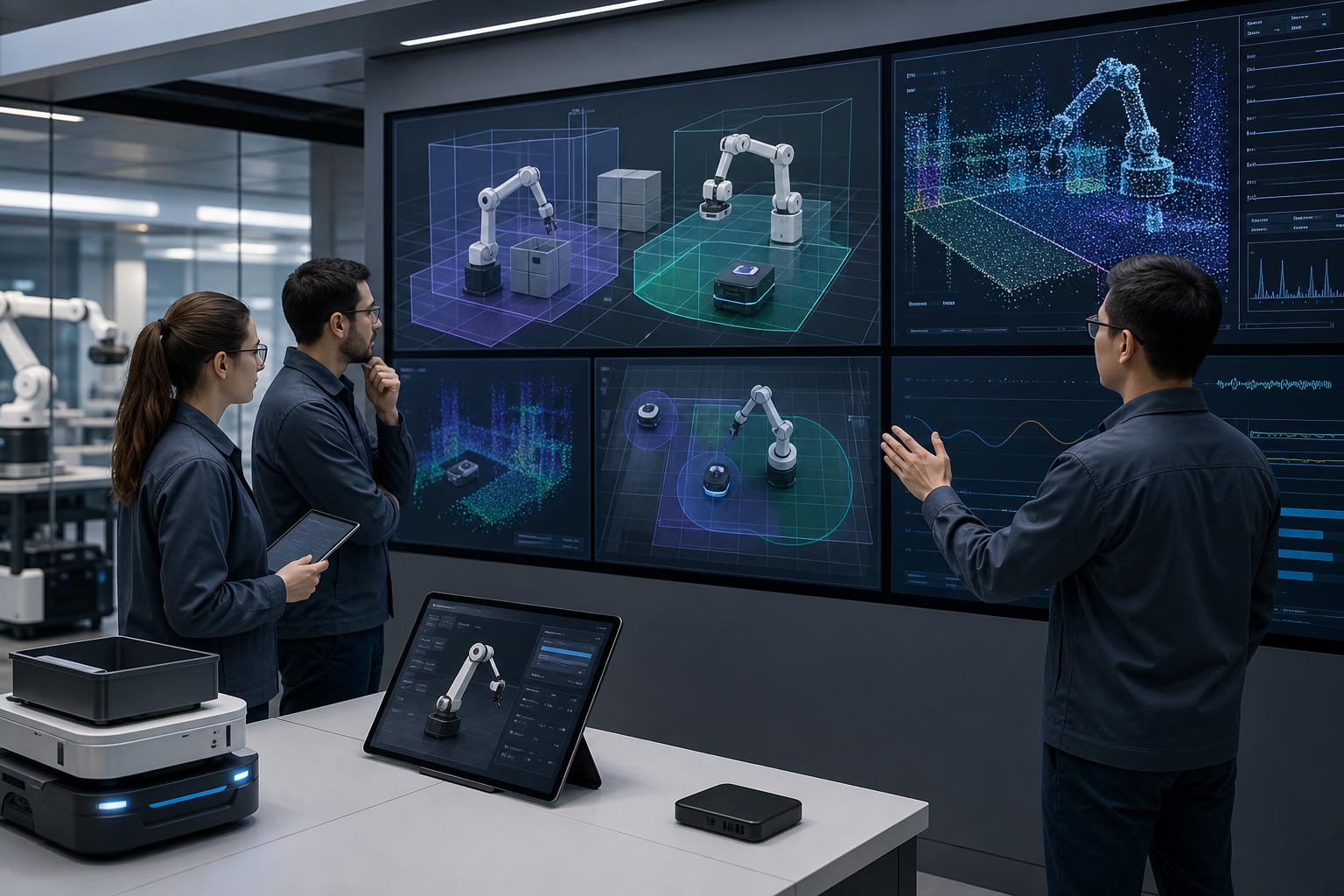
Simulation is no longer only for design teams. NVIDIA’s Isaac Sim materials emphasize physics simulation, synthetic data, robot learning, and industrial facility digital twins. That matters because robots learn and fail expensively in the real world.
Digital twins let teams test robot paths, sensor placement, exception handling, safety zones, queue behavior, and line changes before affecting production. They also help train models where real-world data is limited or risky to collect.
New Service Opportunities Emerge
Physical AI creates openings for system integrators, managed service providers, cybersecurity firms, industrial software vendors, robotics startups, and data platform companies.
Many businesses do not want to become robotics platform experts. They need help selecting use cases, mapping processes, assessing safety, integrating with ERP or warehouse systems, building digital twins, monitoring robot fleets, securing edge devices, and training teams.
The strongest opportunity may be “robotics operations” rather than robot hardware alone: deployment templates, monitoring, maintenance, simulation, safety validation, and business process integration.
Risks Leaders Should Not Ignore
Safety and Liability
Physical AI systems can move heavy equipment near people. That makes safety the first risk category, not the final checklist item. Teams need hazard analysis, fail-safe behavior, emergency stops, access controls, worker training, incident response, and clear accountability.
AI behavior must also be bounded. A robot should not be free to improvise in ways that violate safety rules. Human override, speed limits, geofencing, restricted work envelopes, and conservative fallback behavior are essential.
Cybersecurity
Robots are connected systems. They may include cameras, sensors, wireless links, edge computers, cloud dashboards, APIs, remote access tools, fleet managers, and software update pipelines.
That creates cybersecurity risk. Attackers could steal operational data, disrupt production, alter routes, compromise cameras, abuse remote access, or tamper with models and updates. Physical AI security needs device identity, patching, network segmentation, logging, least-privilege access, secure boot, signed updates, and incident playbooks.
Data Privacy and Worker Trust
Physical AI often uses cameras and sensors in workplaces. That can raise privacy and labor concerns even when the business purpose is legitimate.
Companies should be clear about what is collected, why it is collected, how long it is retained, who can access it, and whether it is used for worker performance evaluation. Poor communication can turn a good automation project into a trust problem.
Overpromising General-Purpose Robots
The physical world is harder than software. Lighting changes, floors get wet, objects deform, humans behave unpredictably, and rare events matter. A model that performs well in a demo may still fail under real operational conditions.
Businesses should avoid vague promises about general intelligence. The better question is specific: can this system perform this task, in this environment, under these constraints, at this cost, with this safety case, and with this level of support?
Integration Complexity
A robot that cannot integrate with production schedules, maintenance systems, inventory records, identity management, safety procedures, and operator workflows will struggle to deliver value.
Integration is often where ROI succeeds or fails. Treat physical AI as an operational change program, not a standalone machine purchase.
A Practical Adoption Playbook
1. Start With a Bounded Physical Workflow
Choose a task that is repetitive, measurable, costly, hazardous, or labor constrained. Good candidates include visual inspection, pallet movement, machine tending, solar pile driving, inventory scanning, lab sample transport, or warehouse route movement.
Avoid starting with an open-ended goal such as “deploy humanoid robots.” Start with a business problem.
2. Map the Environment
Document lighting, floor conditions, object variability, human traffic, network coverage, safety zones, power access, maintenance windows, weather exposure, and failure modes. Physical AI depends on context.
The more variable the environment, the more important simulation, sensing, and exception handling become.
3. Build the Safety Case Early
Involve safety, operations, engineering, security, legal, and frontline workers before procurement is final. Define what the robot can do, what it cannot do, when it must stop, who can override it, and how incidents are investigated.
Use established robotics safety guidance and document assumptions. The goal is not only compliance. It is operational confidence.
4. Use Simulation Before Live Deployment
Create a digital twin or simulation model when the workflow is complex, expensive, or safety-sensitive. Test traffic patterns, robot paths, sensor coverage, edge cases, downtime scenarios, and human-robot interaction.
Simulation will not catch every real-world problem, but it can reduce expensive surprises.
5. Integrate With Business Systems
Connect the physical AI system to the systems that run the operation: MES, ERP, WMS, CMMS, ticketing, identity, security monitoring, and analytics. Without integration, teams will manually bridge gaps and lose the automation benefit.
6. Measure Value in Operational Terms
Track metrics such as throughput, uptime, defect rate, injury exposure, rework, labor hours, overtime, energy use, maintenance cost, order cycle time, and exception rate. Measure before and after deployment.
If the system does not improve a real operational metric, pause before scaling.
What Readers Should Watch Next
Watch industrial deployments before consumer robots. Home robots may get attention, but factories, warehouses, construction sites, farms, and hospitals are more likely to show durable business value first.
Watch simulation and synthetic data. The companies that can train and validate robots safely in digital environments will have a major advantage.
Watch edge AI hardware. Physical AI needs fast local decisions, especially when safety or connectivity is involved.
Watch safety regulation and insurance. As robots work closer to people, insurers, regulators, and enterprise buyers will ask harder questions about validation, logs, incident history, and liability.
Watch system integrators. The winning physical AI projects may come from strong integration more than the most advanced model. Real value depends on process design, deployment support, safety engineering, maintenance, and measurable ROI.
Physical AI is not a magic shortcut to fully autonomous business operations. It is a practical path to make specific physical workflows safer, more flexible, and more resilient. For leaders, the opportunity is to start where the work is measurable, the environment is understood, and the business case is concrete.
FAQ
Is physical AI the same as robotics?
No. Robotics is the broader field of machines that can perform physical tasks. Physical AI refers to AI-powered robotics and autonomous systems that can perceive, reason, simulate, and adapt in the physical world.
Are humanoid robots the main business opportunity?
Not yet for most companies. Humanoids may become important, but near-term value is more likely in industrial arms, mobile robots, inspection systems, construction automation, warehouse fleets, and machine vision.
What industries should evaluate physical AI first?
Manufacturing, logistics, construction, energy, agriculture, healthcare operations, mining, retail, and utilities should pay close attention because they combine physical work, safety exposure, labor constraints, and measurable operational metrics.
What is the biggest risk?
Safety is the highest-priority risk because physical AI systems can move near people and equipment. Cybersecurity, privacy, integration complexity, and overpromised capabilities also matter.
What is the first practical step?
Pick one bounded workflow, measure the current cost or risk, map the environment, involve safety and operations teams, and run a controlled pilot with clear success metrics.
Sources
- NVIDIA: AI for Robotics
- NVIDIA Developer: Isaac Sim – Robotics Simulation and Synthetic Data Generation
- Google DeepMind: Gemini Robotics brings AI into the physical world
- International Federation of Robotics: World Robotics 2025 Industrial Robots executive summary
- CDC/NIOSH: Robotics in the Workplace: An Overview
- OSHA: Industrial Robot Systems and Industrial Robot System Safety
- Business Insider: Autonomous construction bots are building the solar infrastructure behind Meta’s massive Hyperion data center
- MarketWatch: Nvidia is betting on a trillion-dollar robotics boom