
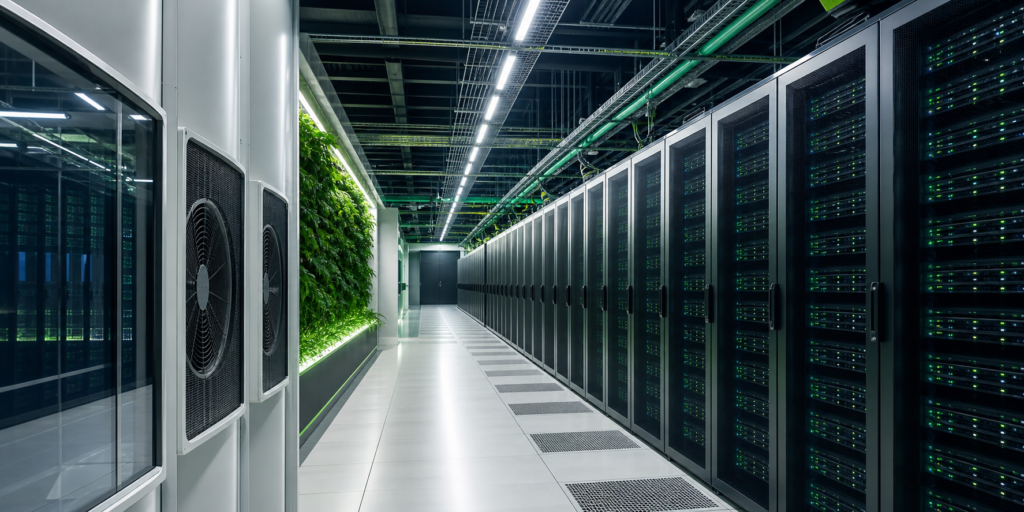

Sustainable AI data centers have moved from a specialist infrastructure topic into a board-level technology issue. The reason is simple: the AI boom is no longer limited by model ideas or software talent. It is increasingly limited by electricity, cooling, water, grid interconnection, land, and community trust.
In June 2026, the signal became harder to ignore. NVIDIA used London Climate Action Week to discuss liquid-cooled AI infrastructure designed for high-density systems, while public debate over data center energy and water use has intensified across the United States and Europe. The International Energy Agency’s Energy and AI report warns that data center electricity consumption could more than double by 2030, with AI as a major driver. The business implication is clear: companies that want scalable AI need an infrastructure strategy, not just a model strategy.
This article explains what sustainable AI data centers are, why cooling and power have become urgent, how businesses can reduce risk, and what readers should watch next.
Why AI Data Centers Are Under Pressure
Traditional cloud workloads already needed large data centers, but generative AI and high-volume inference are changing the economics. Training frontier models can draw massive power over concentrated periods. Inference, the everyday process of running models for users, can become even more important because it repeats across millions or billions of requests.
That creates three practical constraints.
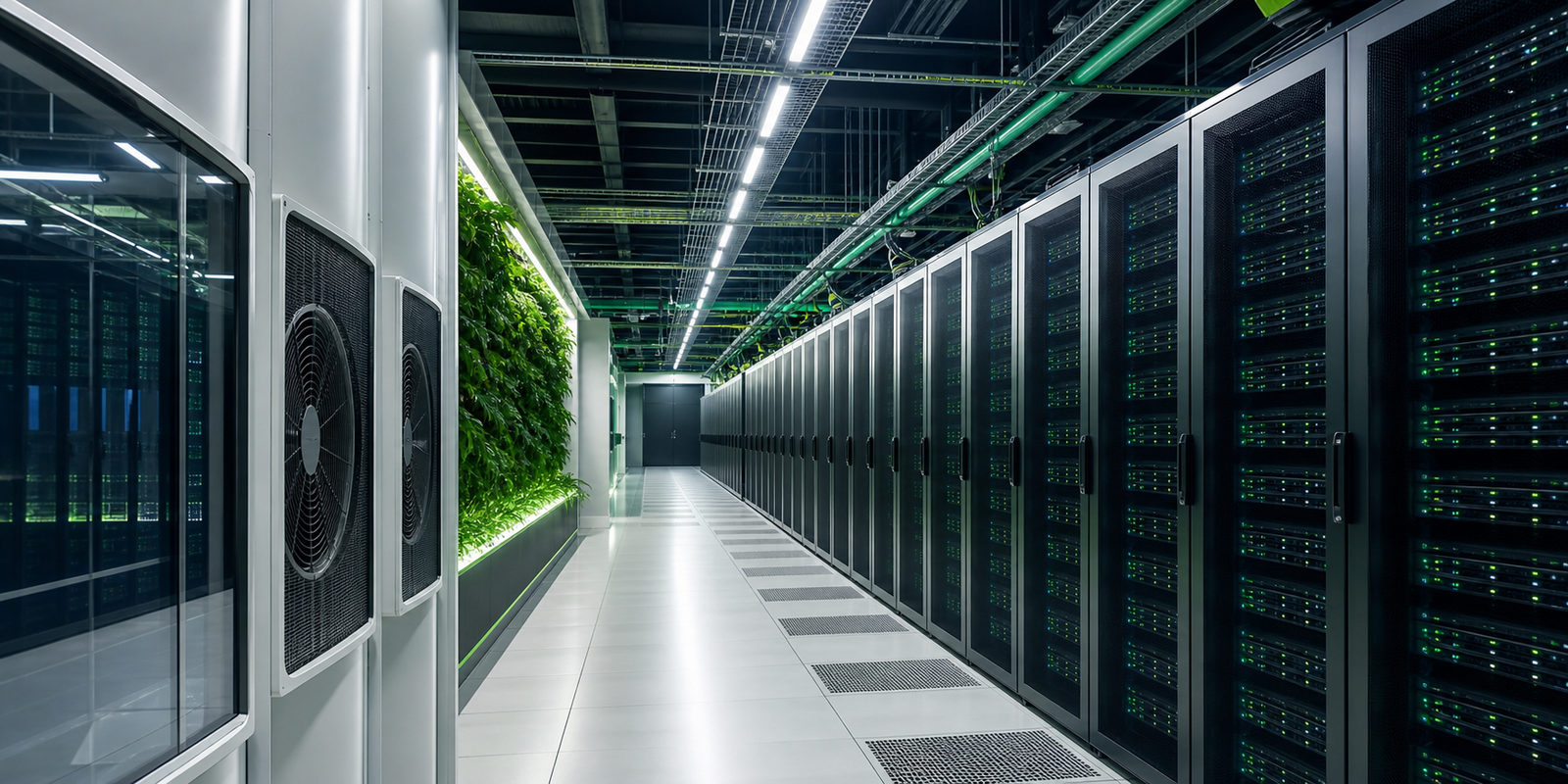
First, AI racks are denser. More GPUs and accelerators are packed into each rack, producing heat that is harder to remove with conventional airflow alone.
Second, grid connection is slower than AI demand. Utilities may need new substations, transmission upgrades, transformers, and generation capacity before a new campus can operate at full scale.
Third, communities are asking sharper questions. Data centers promise jobs, tax revenue, and digital infrastructure, but residents increasingly want to know who pays for grid upgrades, how much water is used, whether electricity bills will rise, and what happens during drought or heat waves.
For technology buyers, this means cloud capacity is not abstract. It depends on physical assets, local policy, and public acceptance.
What Makes an AI Data Center Sustainable?
A sustainable AI data center is not just a building with solar panels. It is an operating model that reduces environmental impact while keeping compute reliable, affordable, and socially acceptable.
The most important dimensions are:
- Energy efficiency: how much useful compute is delivered per unit of electricity
- Cooling efficiency: how much energy and water are needed to remove heat
- Carbon impact: whether new load is matched with clean power and whether it increases fossil-fuel generation at peak times
- Water stewardship: how much water is withdrawn or consumed, and whether local scarcity is considered
- Grid flexibility: whether the facility can shift non-urgent workloads, use batteries, or support demand response
- Transparency: whether operators disclose enough data for customers, regulators, and communities to evaluate claims
The key point is that sustainability is not one metric. A facility can have excellent power usage effectiveness but still create local water stress. Another can buy clean power annually while adding demand during fossil-heavy peak hours. Serious evaluation needs the whole picture.
Liquid Cooling Is Becoming a Mainstream AI Requirement
Air cooling worked well when racks were less dense. AI clusters are changing that. As accelerators draw more power and sit closer together, moving enough cold air through a server hall becomes inefficient and sometimes impractical.
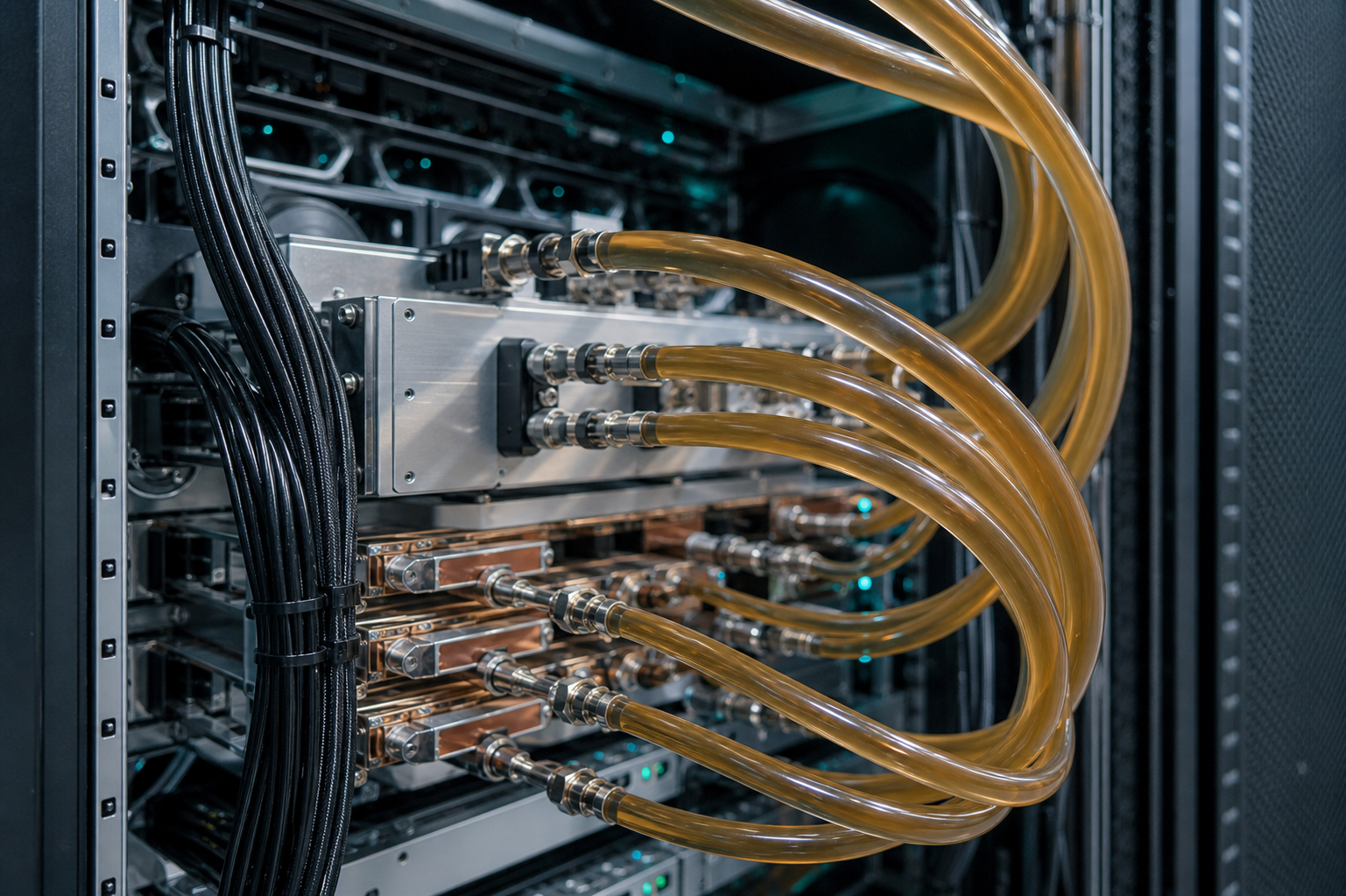
Liquid cooling solves part of the problem by moving heat away from chips more directly. In direct-to-chip systems, coolant runs through cold plates attached to processors and accelerators. The heat is carried to a distribution loop and rejected outside the building, sometimes with less reliance on evaporative cooling.
This matters for business because cooling is now tied to capacity planning. If a company wants access to the latest high-performance AI infrastructure, it may be choosing between facilities that can support liquid-cooled racks and facilities that cannot. That can affect model training timelines, cloud availability, unit economics, and geographic deployment options.
The Tradeoffs Leaders Should Understand
Liquid cooling is not a magic fix. It changes the engineering problem.
It can reduce fan energy, support higher rack density, and make warm-water cooling or heat reuse more practical. But it also requires different facility design, leak detection, staff training, maintenance practices, and supply chain planning. Retrofitting old data centers can be harder than designing new ones around liquid-cooled systems.
The smart question is not “air or liquid?” It is “which workload, rack density, climate, water profile, and facility lifecycle justify which cooling architecture?”
The Water Problem: Local Impact Matters
Water has become one of the most sensitive AI infrastructure issues because it is local. Electricity can be procured through regional markets and contracts, but water stress is felt by nearby communities.
Many data centers use evaporative cooling because it can be efficient in the right climate, but evaporative systems consume water. In drought-prone or rapidly growing regions, that can trigger public opposition. Even when an operator reports strong global water metrics, the local question remains: is this facility drawing from a stressed watershed, and what safeguards exist during heat waves?
Businesses buying cloud or AI services should not treat water as a public relations footnote. It can affect permitting, construction schedules, regional availability, litigation risk, and customer trust.
Practical questions to ask providers include:
- What is the facility’s water usage effectiveness and how is it measured?
- Is the water potable, recycled, reclaimed, or industrial-grade?
- What happens during drought restrictions?
- Does the provider publish site-level or regional water data?
- Are cooling decisions aligned with local watershed conditions?
These questions are especially important for companies making sustainability commitments. A model may look clean in a dashboard while its compute runs in a region with serious water constraints.
Power Procurement Is Now Part of AI Strategy
AI data centers are becoming large electricity customers, and that makes power procurement a strategic decision. Buying renewable energy certificates is not the same as ensuring that new AI load is matched with clean, reliable electricity where and when it is used.
The next generation of AI infrastructure will likely combine several approaches:
- Long-term power purchase agreements for wind, solar, geothermal, hydro, or nuclear generation
- On-site batteries or nearby storage to reduce peak grid stress
- Demand response for flexible training or batch workloads
- Better scheduling so non-urgent AI jobs run when clean power is abundant
- Waste heat reuse where climate, district heating, or industrial neighbors make it practical
This is where software development and data science teams enter the picture. Not every AI workload has to run immediately. Training jobs, indexing pipelines, synthetic data generation, simulations, and analytics can often be scheduled. When platforms expose carbon-aware or grid-aware controls, developers can help reduce infrastructure stress without changing the end-user experience.
Business Impact: The New AI Infrastructure Risk
For enterprises, sustainable AI data centers affect more than the sustainability report.
Cloud Costs and Availability
If power, cooling, and permitting become bottlenecks, AI capacity becomes more expensive and less predictable. Businesses may face regional limits, higher reserved-capacity prices, or longer lead times for GPU-heavy workloads.
Vendor Selection
Infrastructure transparency will become a competitive factor. Buyers should compare cloud and colocation providers on energy sourcing, cooling readiness, water reporting, hardware refresh plans, uptime history, and geographic resilience.
Regulatory and Reputation Risk
Governments are increasingly interested in data center energy demand, grid impact, and local resource use. Companies that rely heavily on AI may be asked to explain the environmental footprint of their digital operations, especially in regulated sectors or public contracts.
AI Product Design
Efficient models, retrieval strategies, caching, batching, smaller domain-specific models, and smarter inference routing can reduce compute needs. Sustainable AI is therefore not only a facilities issue. It is also an architecture issue.
A Practical Playbook for Companies Using AI
1. Measure AI Compute Separately
Track AI workloads apart from general cloud usage. Separate training, fine-tuning, inference, vector search, analytics, and storage. Without workload-level measurement, it is impossible to know which products or teams are driving cost and environmental impact.
2. Ask Providers for Facility-Level Evidence
Marketing claims are not enough. Ask cloud, hosting, and colocation providers for data on energy sourcing, cooling method, water usage, PUE, WUE, carbon accounting method, and regional risk.
3. Optimize Models Before Buying More Capacity
Use smaller models where they perform well. Cache repeated responses. Batch non-urgent workloads. Apply retrieval carefully so models receive less irrelevant context. Compress prompts and outputs. These software choices can reduce infrastructure pressure immediately.
4. Match Workloads to Regions Intelligently
Some regions may offer cleaner power, better cooling conditions, or lower water stress. Others may offer lower latency or data residency benefits. The best placement decision balances performance, compliance, cost, carbon, and local resource constraints.
5. Build a Governance Review for High-Compute AI
Large AI initiatives should include infrastructure review before launch. The review should ask whether the use case justifies the compute, whether there is a cheaper or smaller architecture, what provider data is available, and how impact will be monitored over time.
Opportunities for Startups and Service Providers
The infrastructure pressure around AI creates opportunities beyond hyperscale cloud.
Startups can build tools for AI workload measurement, carbon-aware scheduling, cooling analytics, data center digital twins, grid-flexible orchestration, and provider comparison. Managed service providers can help clients reduce AI cloud waste through model selection, prompt optimization, caching, and regional architecture reviews.
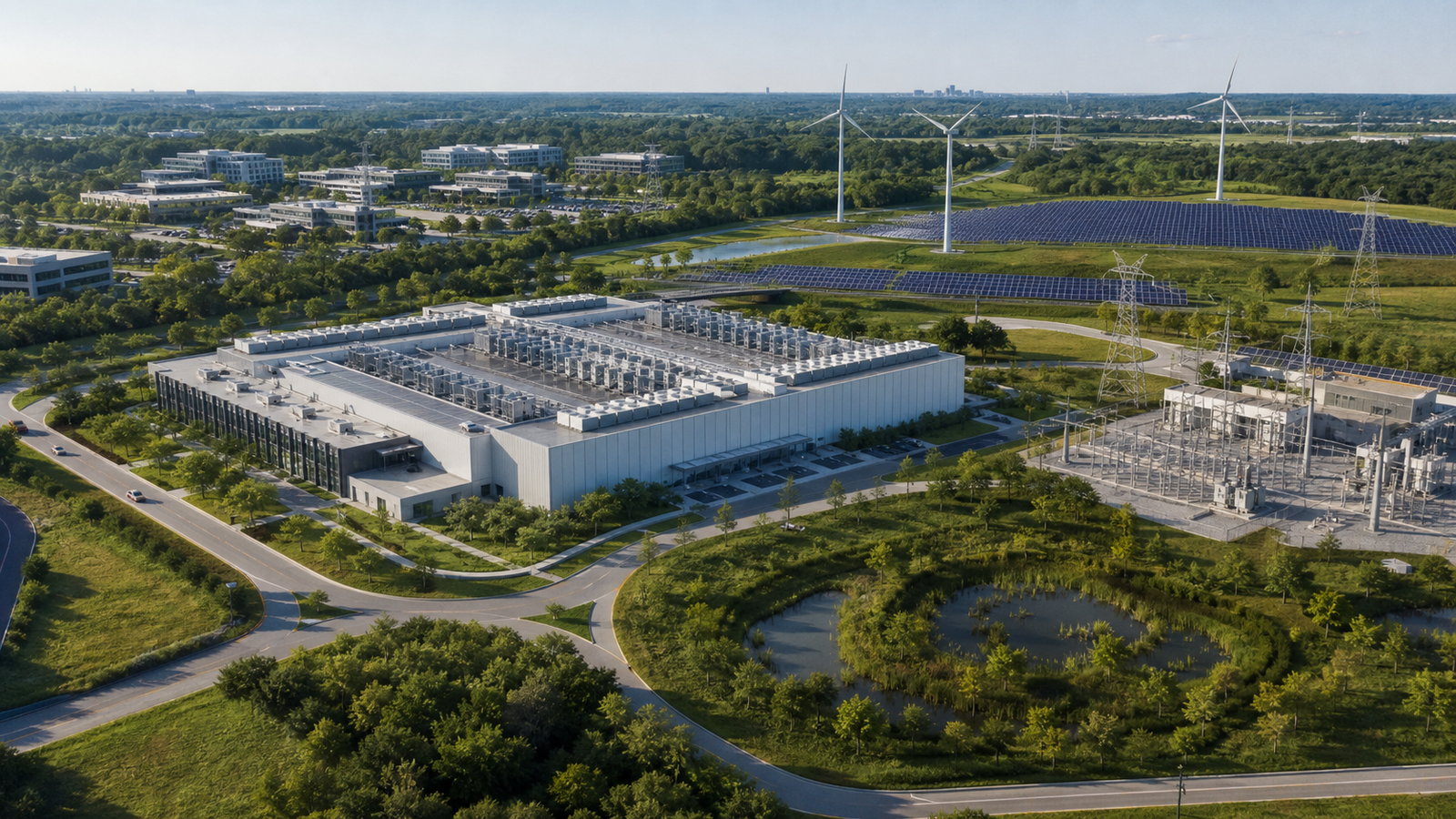
There is also room for local innovation. Municipalities, utilities, and industrial operators can explore heat reuse, microgrids, reclaimed water systems, and demand response programs. The winners will be the organizations that treat compute, energy, and community impact as one system.
What Readers Should Watch Next
Three developments will shape sustainable AI data centers over the next 12 to 24 months.
First, watch liquid cooling adoption. As rack densities rise, liquid cooling will move from premium deployments into mainstream AI infrastructure.
Second, watch disclosure rules and utility proceedings. Regulators are likely to demand better data on electricity demand, grid upgrade costs, water consumption, and community impacts.
Third, watch software efficiency. The biggest sustainability gains may come from using less compute in the first place: smaller models, better retrieval, caching, batching, and workload scheduling.
AI growth is real, but so are the physical limits. The companies that understand both will make better technology and better business decisions.
FAQ
What are sustainable AI data centers?
Sustainable AI data centers are facilities and operating models designed to deliver AI compute while reducing energy waste, carbon impact, water stress, and local community risk.
Why is liquid cooling important for AI?
AI racks can be much denser and hotter than traditional server racks. Liquid cooling removes heat closer to the chips, which can support higher performance and reduce pressure on air cooling systems.
Does using renewable energy make an AI data center sustainable?
It helps, but it is not enough by itself. Buyers should also look at when and where power is used, water consumption, cooling method, grid impact, equipment efficiency, and transparency.
How can software teams reduce AI infrastructure impact?
They can use smaller models, cache repeated outputs, batch non-urgent jobs, reduce unnecessary prompt context, route workloads to efficient regions, and measure compute by product or workflow.
Sources
- International Energy Agency: Energy and AI
- International Energy Agency: Key Questions on Energy and AI
- The Verge: NVIDIA thinks liquid-cooled AI data centers can handle extreme heat
- Lawrence Berkeley National Laboratory: 2024 United States Data Center Energy Usage Report
- Uptime Institute: Global Data Center Survey
- Google Data Centers: Water stewardship
- Microsoft: Datacenter water and energy sustainability