

On July 9, 2026, Google Research and Google DeepMind published a result that will reshape how the industry thinks about data science 2026 and beyond. A single AI model — trained on over one trillion minutes of sensor data from more than five million Fitbit and Pixel Watch users across more than 100 countries — successfully predicted cardiovascular risk, depression, anxiety, and 32 other health conditions, outperforming purpose-built, task-specific models on 34 out of 35 benchmarks. No lab tests required. No specialist consultations. Just the continuous stream of signals from a device most people already wear on their wrist.
That model is called SensorFM, and it represents exactly what data science 2026 is about: foundation models built on real-world data at a scale that was simply unthinkable three years ago, now producing practical results that matter to businesses, governments, and everyday people.
The field has always moved quickly, but this year something structural has changed. We are no longer watching proofs of concept. The largest and most credible organizations in the world — Google, Moonshot AI, Anaconda, Databricks — are shipping production-ready systems, making strategic acquisitions, and publishing benchmarks that draw a clear line from raw sensor data to actionable intelligence. This guide breaks down what is happening in data science in 2026, why it matters, and what it means for your industry.
Data Science 2026: Why Foundation Models Are Different Now
A foundation model is a large AI system trained on a massive, general-purpose dataset. Instead of building a new model from scratch for every task — one for fraud detection, another for patient monitoring, a third for demand forecasting — a foundation model is trained once on broad data, then adapted to specific jobs with minimal additional training.
The concept was introduced at Stanford in 2021, and since then foundation models have moved from research papers to production systems faster than most analysts predicted. What changed in 2026 is not the concept but three specific conditions that converged simultaneously: the scale of the training data grew by an order of magnitude, the most capable models became available as open weights for the first time, and domain-specific variants started appearing in healthcare, materials science, and enterprise analytics — not just language.
For most of the early 2020s, foundation models primarily meant language models: GPT-series, Claude, Gemini. They were good at understanding and generating text. But in 2026, foundation models are appearing for health sensor data (Google SensorFM), molecular chemistry, genomics, and climate systems. The data science question has shifted from “can we build a general model?” to “what happens when we train on a trillion data points from the domain we actually care about?” The answer, based on July 2026 results, is consistently the same: better outcomes than anything purpose-built that came before.
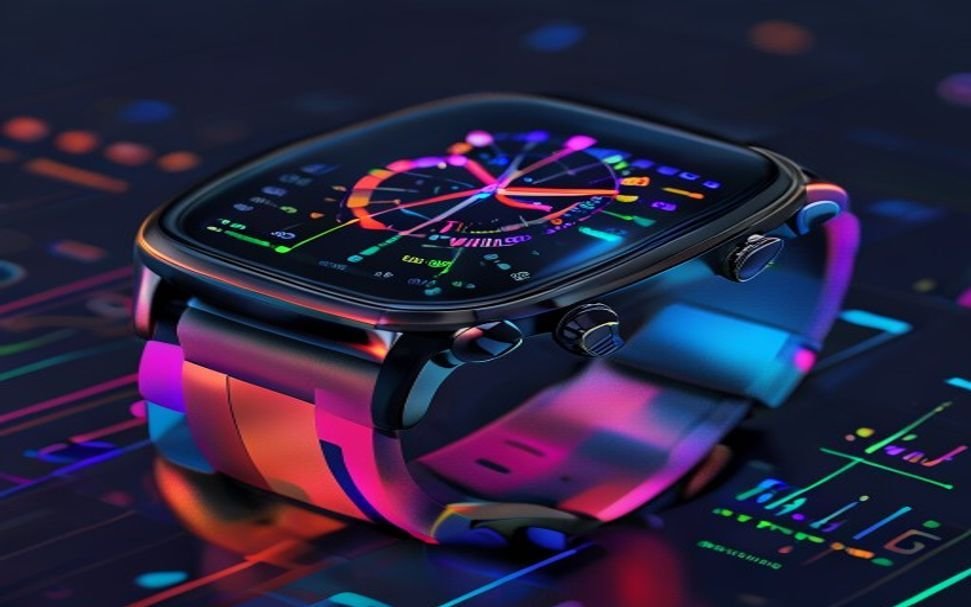
Google SensorFM: A Trillion-Minute Case Study
SensorFM is the clearest example of what domain-specific foundation models can achieve at real-world scale. Here is what Google Research built:
- Training dataset: More than one trillion minutes of sensor readings from five million consenting Fitbit and Pixel Watch users across 100+ countries, collected between September 2024 and September 2025
- Input signals: Five sensor modalities — photoplethysmography (PPG, which measures blood flow through light reflection), accelerometry (motion), electrodermal activity (EDA, skin conductance), skin temperature, and altimetry (elevation changes)
- Task coverage: 35 distinct health prediction tasks spanning cardiovascular risk, metabolic health, sleep quality, mental health (depression and anxiety), and demographic inference
- Performance benchmark: The largest variant, SensorFM-B, cut reconstruction error by 31% compared to smaller variants, lifted classification performance by an average of 9% in AUC (area under the curve), and lifted regression performance by an average of 21% in Pearson correlation, while beating task-specific baselines on 34 of the 35 benchmarks
The technical innovation is a masking scheme called Adaptive and Inherited Masking (AIM), which treats genuinely missing sensor readings — common in real-world wearables when a user takes the device off — as equivalent to deliberately hidden values used during training. This means SensorFM learns to work with the fragmentary, gap-riddled data streams that actual consumer wearables produce, not the clean data that exists only in controlled lab settings.
The practical implication is that SensorFM can function as the backbone of a “Personal Health Agent” — an AI system that uses only your wearable’s continuous data stream to provide clinically meaningful health predictions. According to MarkTechPost, the model’s performance rivals ground-truth clinical lab data when used to power downstream health applications.
For healthcare organizations, insurers, and consumer health companies, that is not a research result. That is a product roadmap for the next 24 months.
Kimi K3: Open-Weight Models Democratize Advanced Analytics
While Google’s SensorFM announcement captured health analytics headlines, another major data science event happened on July 16: Moonshot AI released Kimi K3, the largest open-weight AI model in history at 2.8 trillion parameters — nearly triple the size of its predecessor.
For data science teams, the significance is not the parameter count alone. It is what “open-weight” means at this scale. Unlike GPT-5.6 or Claude Fable 5, which are accessible only through paid, rate-limited APIs, Kimi K3’s full model weights are publicly released, allowing organizations to run the model entirely on their own infrastructure. No per-token charges. No data leaving the building.
The efficiency story is equally important. Kimi K3 uses a technique called Stable LatentMoE (Mixture of Experts), which activates only 16 of its 896 expert sub-networks for each token it processes — roughly 1.8% of the total model — keeping inference costs tractable despite the enormous parameter count. Combined with a one-million-token context window and native vision capabilities, Kimi K3 gives data science teams a frontier-level general reasoning engine that can be self-hosted.
According to independent benchmarks reviewed by Tom’s Hardware, Kimi K3 ranked first in Frontend Code evaluation at 1,679 points in blind developer testing, ahead of both Claude Fable 5 and GPT-5.6. For enterprise data science tasks — analytics pipeline code generation, automated report writing from structured datasets, complex reasoning over large document repositories — this represents a genuine alternative to proprietary API dependency.
The data science 2026 implication is particularly significant for organizations in regulated industries. Banks, healthcare systems, and defense contractors that cannot send sensitive data to third-party cloud APIs now have a credible path to self-hosted, frontier-level intelligence without the previous tradeoff in capability.
The Enterprise Analytics Infrastructure Is Consolidating
Beyond individual model releases, the week of July 14–20 reveals a consolidation wave in enterprise analytics infrastructure — a sign that the data science 2026 market is maturing from experimentation to operational investment.
Anaconda acquired Kilo Code, a company focused on observability and infrastructure tooling for data and AI applications. This signals that even the foundational Python data science environment — the platform most working data scientists use daily — is evolving toward integrated production observability: understanding what your models are doing in production, not just confirming they are deployed, according to Solutions Review.
Actian (the data and AI division of HCLSoftware) completed its acquisition of Jaspersoft, integrating pixel-perfect reporting and embedded analytics into its data management portfolio. For businesses that embed analytics into customer-facing products, this consolidation simplifies the vendor stack and reduces the integration overhead that has historically made enterprise analytics projects run over budget.
Databricks continued its enterprise expansion with updates to its unified analytics platform, reinforcing the trend toward lakehouse architectures that eliminate the traditional hard separation between data warehouses and data lakes.
Market data confirms the scale of enterprise demand. The global data analytics market is valued at $108.79 billion in 2026 and growing at a 32.15% CAGR, according to Mordor Intelligence — a growth rate that reflects genuine enterprise adoption rather than speculative positioning. Among enterprises already using data science platforms, 62% cite advanced analytics as a primary driver, and organizations deploying AutoML tools from vendors such as Dataiku, H2O.ai, and Google Vertex AI report three times higher model production rates compared to traditional manual workflows (MindInventory, 2026).

Challenges: What the Headlines Do Not Tell You
The honest picture of data science in 2026 requires acknowledging the gap between what is technically possible and what most organizations are actually achieving.
Gartner predicts that over 40% of agentic AI projects — the category that powers advanced analytics automation — will be canceled by the end of 2027 due to escalating costs, unclear business value, or inadequate risk controls (Gartner, June 2025). This is not a failure of the technology. It is a failure of organizational readiness. The core challenges data science teams face in 2026:
- Data quality is still the primary bottleneck. Foundation models require massive, clean, well-labeled datasets. Most enterprises have data fragmented across systems, inconsistently formatted, and inadequately documented. Google’s SensorFM required two years of continuous data from five million users just to reach production quality. Most companies cannot replicate that data pipeline.
- Model explainability remains unsolved at scale. Even the most capable foundation models — including SensorFM and Kimi K3 — operate as partial black boxes. Healthcare regulators, financial authorities, and legal teams increasingly require clear explanations for automated decisions, and “the model predicted this outcome based on your wearable data” is not yet a complete answer.
- Infrastructure costs scale with model complexity. Running a 2.8-trillion-parameter model requires significant compute hardware even with efficiency optimizations like Mixture of Experts. The capital investment required to self-host frontier-level open-weight models is substantial for organizations below enterprise scale.
- AI governance is still catching up to deployment speed. McKinsey’s 2026 AI trust report notes that organizations moving to foundation-model-based analytics face accountability and auditability requirements that most current compliance frameworks were not designed to handle.
According to MIT Sloan Management Review, the organizations navigating these challenges successfully treat data science governance as a precondition for scaling, not an afterthought. Teams that build audit trails, human-in-the-loop review steps, and explainability documentation early are the ones that avoid costly rollbacks later.
What Data Science 2026 Means for Your Industry
The foundation model inflection point is not limited to technology companies. The practical implications reach across every sector:
- Healthcare: Domain-specific models like SensorFM create a template for building health intelligence from wearable and sensor data. Medical imaging, genomics, and clinical note analysis are the next domains to see similar foundation model releases in the next 12–24 months.
- Financial services: Open-weight models like Kimi K3 give compliance-sensitive organizations a path to advanced AI without sending transaction data to external APIs. Fraud detection, credit scoring, and trading signal analysis are the first use cases to watch.
- Manufacturing: The industrial equivalent of SensorFM — a foundation model trained on equipment vibration, temperature, and pressure sensor data — will enable predictive maintenance that outperforms current rule-based systems by a similar margin.
- Retail and e-commerce: AutoML platforms compressing model development cycles from weeks to hours are enabling demand forecasting and personalization at a scale previously reserved for only the largest operators.
- Government and research: Kimi K3’s open weights give public-sector organizations and academic institutions access to frontier reasoning capabilities without budget dependency on proprietary APIs, enabling AI sovereignty for data-sensitive applications.
The Bigger Picture
What Google’s SensorFM announcement, Moonshot AI’s Kimi K3 release, and this week’s enterprise analytics acquisitions share is a common direction: data science 2026 is moving decisively from capability demonstrations to real-world deployment at scale.
Three years ago, the data science conversation was about whether foundation models could work at all. Two years ago, it was about whether they could work reliably in production. Today, the conversation is about which industries adopt them fastest, and what organizational and governance infrastructure needs to exist to make that adoption responsible and sustainable.
The trillion-minute wearable dataset and the 2.8-trillion-parameter open-weight model are milestones, not endpoints. Organizations that invest in the data infrastructure, governance processes, and domain expertise required to use these tools well in 2026 will have a compounding advantage over those still conducting internal evaluations in 2027. The window between early adoption and widespread deployment is closing faster than most enterprise technology cycles — and this time, the foundation models are already in production.